
Just before I begin: SPOILERS ALERT
Recently I finished reading Tolkien’s “The Hobbit” (I know it’s a bit late, but took me quite a while to get back to the world of fantasy after studying lots of “literal” works) and I couldn’t help notice a certain similarity it bears with Shakespeare’s “Measure for Measure”.
Just before The Battle of the Five Armies in “The Hobbit”, the dwarves, upon reviving their treasure in the Lonely Mountain after Smaug’s death, proceeds to seal themselves and protect “their” gold from the elves and the Lake-men, who demand a share of it–and a fair and just amount of it–because it was them who killed the dragon and the gold would help the renovation of ruined villages. The dwarves, being dwarves, valuing their treasure above all else, refuses, and a stalemate ensues.
Bilbo, being on the side of the dwarves–literally–but disapproving of Thorin’s decision, takes the Arkenstone, the gem that Thorin values above all else, puts on the ring and disappears in the night, sneaking to the camp of the elves and Lake-men to negotiate with them. By giving them the Arkenstone and returning to the dwarves’ side, he successfully allows a deal to be struck between the dwarves and the elves. The plan was only foiled with the coming of Dain to reinforce the dwarves.
It seems to me that this plan Bilbo came up with bears much similarity with the plan created by the Duke in order to from Angelo in Shakespeare’s “Measure for Measure”.
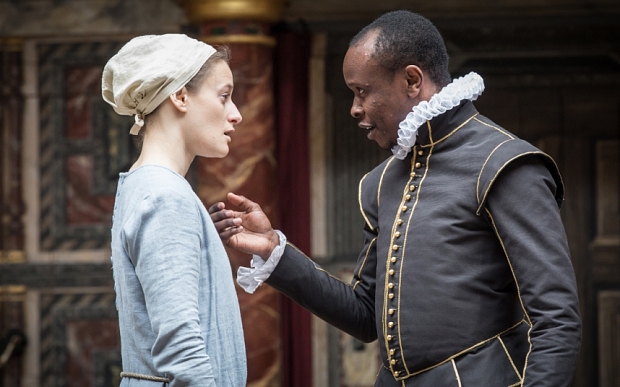
By disguising himself as a friar and staying hidden just like Bilbo, the Duke bids Isabella to accept Angelo’s request for sex which commits fornication. During that night, Mariana–Angelo’s fiancé that he abandoned years ago due to her lack of dowry–replaces Isabella and has sex with Angelo instead, so that in the final scene the Duke can reveal everything and force Angelo to marry Mariana.
Although not “plagiarising-ly” similar, Tolkien does seem to draw inspiration from Shakespeare in his final part of the novel, although the Duke’s plan is much more elaborate in “Measure for Measure”. However, this leads me to think: is this a good thing? Do both plans work?
In “The Hobbit”, had it not been for the arrival of Dain, I am sure the dwarves would break out in a civil war–Thorin against the others–and would eventually have to give in to the deal. Angelo was, in the end, exposed of his sins, and forced to marry Mariana, which leads to a “happy, Shakespearean” ending. So, in a sense, both plans do work, but of course it’s never a win-win situation, and the dwarves as well as Angelo will definitely be unhappy about it.
But here’s the big question: is it rightful for the Duke and Bilbo to do such a thing? As we have heard from countless superhero movies (Transformers, Spiderman etc.), with great power comes great responsibility. Is it responsible of them to frame a certain person and turn the situation in their favour (some say the Duke did it to win Isabella’s hand, and Bilbo obviously wanted to go home to his nice, warm hobbit-hole)? Share your thoughts in the Comments section!

 Literally Left-handed
Leave a comment