
The first round was held internationally in three different venues: Berlin’s University of Arts, Singapore’s Yong Siew Toh Music Conservatory and New York’s DiMenna Center. Competitors only played for 25 minutes (yup, that’s considered short), and had to offer a programme which included pieces from the baroque/classical AND romantic/20th century periods. Listening to the 24 participants who got into the second round, I categorized them into six groups of four competitors each, and for each entry, I will review one group. They are not ordered in any specific way, but randomly chosen.
GROUP 1
Eric Lu (USA)
Fuko Ishii (Japan)
Jinhyung Park (South Korea)
Yuanfan Yang (United Kingdom)
Eric Lu, 20

I’ve heard of Eric before. I watched him play in the Chopin Piano Competition online three years ago, and was pretty impressed by his playing, so I was excited when I saw him on the list of the Leeds. What really shocked me was that he’s only a year older than me, so I had to swallow my own ego while I watched him gracefully work miracles on the piano.
For his first round, he chose Mozart’s Piano Sonata in C Major, K. 330, and Chopin’s Barcarolle, op. 60. A pretty bold choice, since both pieces really expose the performer. They aren’t technically showy piece, but they are gems for the piano repertoire, and to make them shine the performer must polish them perfectly and not be afraid to show them in their entirety. Eric is very brave in putting his faith on these two pieces.
His Mozart had an innocent quality, almost as if a child had played it, except a child would definitely not have managed this sonata with such ease. I especially liked the way he played the first movement, probably because I am most familiar with it. His lightheartedness really showed through in his playing, making a listener feel lighthearted as well, and I wonder how he’s able to feel that way under such pressure. Although he plays the sonata with ease, he never loses his concentration; I could tell from the way his playing captured my attention. Normally, any easy piece would bore me quickly, but Eric’s playing really did make me marvel at the delight of Mozart, I feeling I frequently forget after hearing his stuff played in shopping malls and elevators all the time. I especially admire the improvisatory way he played it, as if he was Mozart improv-composing his new sonata.
Any seasoned piano player will know the difficulty in pulling off a brilliant performance of Chopin’s Barcarolle. People have often talked about how hard it is to evoke the lilting quality in the left hand that pervades the entire piece. Honestly, the starting tempo Eric chose was a tad bit too fast for me, and I didn’t really feel the lilt, but he makes it up with the way his right hand sings the melody. It was beautiful. I especially loved the tense moment when the music goes really quiet, at around 18:40, like the calm before the storm. Overall, I thought the Barcarolle was very nicely done, but the ending could be even more dramatic. Chopin’s Barcarolle is one of my favourite pieces by the composer, and I have high expectations for any performance of it. Eric has delivered a decent performance, but it isn’t the best performance of the Barcarolle that I’ve heard.
Despite my criticisms, I think Eric definitely delivered a convincing First Round performance, and I look forward to hearing him play my favourite Chopin piece in the Second Round–his fourth ballade.
Listen to Eric’s First Round performance here: https://leedspiano2018.medici.tv/replay/first-round-with-eric-lu/
Fuko Ishii, 27

She might be small in size and stature, but Fuko Ishii certainly delivered a powerful and dramatic First Round performance! Her choice of repertoire includes Haydn’s Piano Sonata in D Major, Hob. XVI: 42 and Brahms’ 4 Klavierstücke (Piano Pieces), op. 119. I’m not too familiar with Haydn’s sonata, but the set of pieces by Brahms is arguably my favourite set among all the Klavierstücke sets by the composer.
Fuko’s performance of the Haydn sonata was an absolute delight. She produced a wide range of colours with her touch, jumping from extreme delicacy to dramatic surprise without a moment’s notice; very characteristic of Haydn indeed. I feel like she was aware of how much more the modern piano can bring to sonatas from the Classical period, which were originally written for the fortepiano, an instrument that is restrictive in its sound and quality compared to its modern successor. She never lost any of the creative and improvisatory flourish that is so essential to playing Haydn, especially when the first movement only recycles a couple of the same chords, adding embellishment to each return. She also fully demonstrated her virtuosity in the Assai vivace second movement, closing the short but delightful sonata with a humourous touch. I’m quite tempted to learn it now.
Brahms’ op. 119 is the composer’s final composition for the solo piano, completed only four years before his death, so naturally piano teachers would say one has to be “very mature and experienced” to evoke the essence of it *imitates posh tone*. They’re not wrong though. For me, the last piece–the Rhapsody–has always been the most exciting, and I love the way Brahms plays around with the rhythm of the melody in the third Intermezzo, but Fuko showed what a beautiful piece the first Intermezzo can be. She played it slower than most recordings I’ve heard, and each chord was so carefully fondled in a way that I heard the melancholic tone of the Intermezzo in a way I’ve never heard before. Also, her interpretation of the middle E major section in the second Intermezzo–around 11:45–was a fresh one. Rather than being a warm embrace, it felt like a reminiscence of good times, and the touch of melancholy certainly lingered despite the warm tone of E major; I really liked that.
Bravo to Fuko! I look forward to hearing her rendition of Beethoven’s Piano Sonata No. 22 and Schumann’s Davidsbündlertänze in the Second Round, both of which are not staple competition pieces but I’m sure she’ll bring something good for the audience to remember.
Listen to Fuko’s First Round performance here: https://leedspiano2018.medici.tv/replay/first-round-with-fuko-ishii/
Jinhyung Park, 22
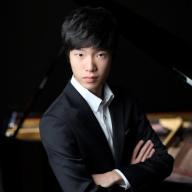
In recent years, South Korea has risen to be a great threat in the world of classical music competitions. Some memorable figures for me would be Yeol Eum Son, who won Silver in the International Tchaikovsky Competition in 2011, and Seong Jin Cho, who won Gold in the last Chopin Competition.
For his First Round, Jinhyung Park performed three pieces: Beethoven’s Piano Sonata No. 24 in F sharp Major, op. 78, Chopin’s Nocturne in C Minor, op. 48 No. 1 and Liszt’s Tarantella, S. 162. Beethoven’s 24th sonata is one of his two-movement sonatas, alongside the likes of his op. 79 Sonatine and op. 90 (which I adore). The melody of the first movement is beautiful in its simplicity and the second movement is quirky and humourous in its dramatic changes between fortissimo’s and pianissimo’s. Frankly, I think Jinhyung was a bit too serious in his rendition of this piece for my liking. He added too much pedal and rubato in the first movement instead of letting its simplicity show forth. In the second movement he was careful in creating the changes in dynamics and tone, but I think a bit too careful that he wasn’t able to evoke the humour I believe demanded from the piece.
His sombreness suited the next piece in line, though. The Chopin Nocturne, I believe, is very melancholic, and Jinhyung’s slow take on the beginning really worked. However, when he got to the doppio movimento part, or the recap, his playing was flowing, but the intensity of feeling didn’t really come through, at least not through my laptop speakers, so I can’t say the Chopin Nocturne left too deep an impression in me.
After his performance of Liszt’s Tarantella, there should be no question about Jinhyung’s technical brilliance. No repeated notes, octaves or leaps was daunting to him. His fingers are nimble and so quick even the high resolution of the camera couldn’t follow it, and his full command of the Tarantella’s difficulty made the ending all the more exciting. Nevertheless, I think Jinhyung put far too much effort in crafting the melody of the middle section (which begins at around 16:03); rather, I think the beauty of the melody should come from the effortlessness with which it is played, together with the dazzling ornamentations in the high registers that embellish it. Something similar to the melody of Liszt’s Rigoletto Paraphrase.
All in all, Jinhyung’s performance was decent, but apart from his technical brilliance, nothing struck me as particularly special. Hopefully Tchaikovsky’s Dumka and Chopin’s infamous Third Piano Sonata will suit him better in the Second Round.
Listen to Jinhyung’s First Round performance here: https://leedspiano2018.medici.tv/replay/first-round-with-jinhyung-park/
Yuanfan Yang, 21

Having gone to the finals of the BBC Young Musician of the Year in 2016, Yuanfan Yang has taken a step up onto the international stage with the Leeds Piano Competition, and as one of the youngest competitors, he’s doing pretty well for himself! With a different twist, Yuanfan takes us back in time, starting with Granados and concluding with Haydn.
Enrique Granados’ El Amory La Muerte is the fifth piece from his famous piano suite Goyescas, which was inspired by the paintings of Francisco Goya. Admittedly, this is the first time I’ve heard it, and it was quite unexpected for me. Dissonant and improvisatory, it didn’t sound very Spanish-y to be, what with their rich melodies and luscious harmonies, if you understand what I mean. Despite its technical demands, Yuanfan played it with relative ease, but that’s about as much as I can note from that performance.
Following that was the first piece of Ravel’s piano suite Miriors: Noctuelles. Despite this being by a French composer, I don’t think it created such a huge contrast from the Spanish piece that preceded it, and I’d say it wasn’t the best choice for Yuanfan’s programme. Nevertheless, I really enjoyed the unique harmonies of Ravel, and I’m sure I only enjoyed it because Yuanfan enjoyed it just as much. Once more, this is the first time I’ve heard the piece, and it got more and more interesting as I listened.
I thought Haydn’s Fantasia in C didn’t sound interesting when Yuanfan started playing, but gradually I started to see where he was going at, and by the end of it I think it was the most striking piece in his programme, and he definitely made the right decision of ending his First Round performance with this. To me, it sounded like a perpetual argument between the bass clef and treble clef in different keys, and when I saw it that way, it started becoming interesting and fun to listen, especially when Yuanfan was really attentive to the changes of key, as if it came not only as a surprise to me, but to him as well.
I must say, my impression of this young pianist at the end really differed from what it began with. I’m also very intrigued by his choice of Second Round repertoire: Beethoven’s Sonata in G, op. 31 No. 1, Chopin’s Berceuse and Liszt’s Fantasia and Fugue on Bach.
Listen to Yuanfan’s First Round performance here: https://leedspiano2018.medici.tv/replay/first-round-with-yuanfan-yang/
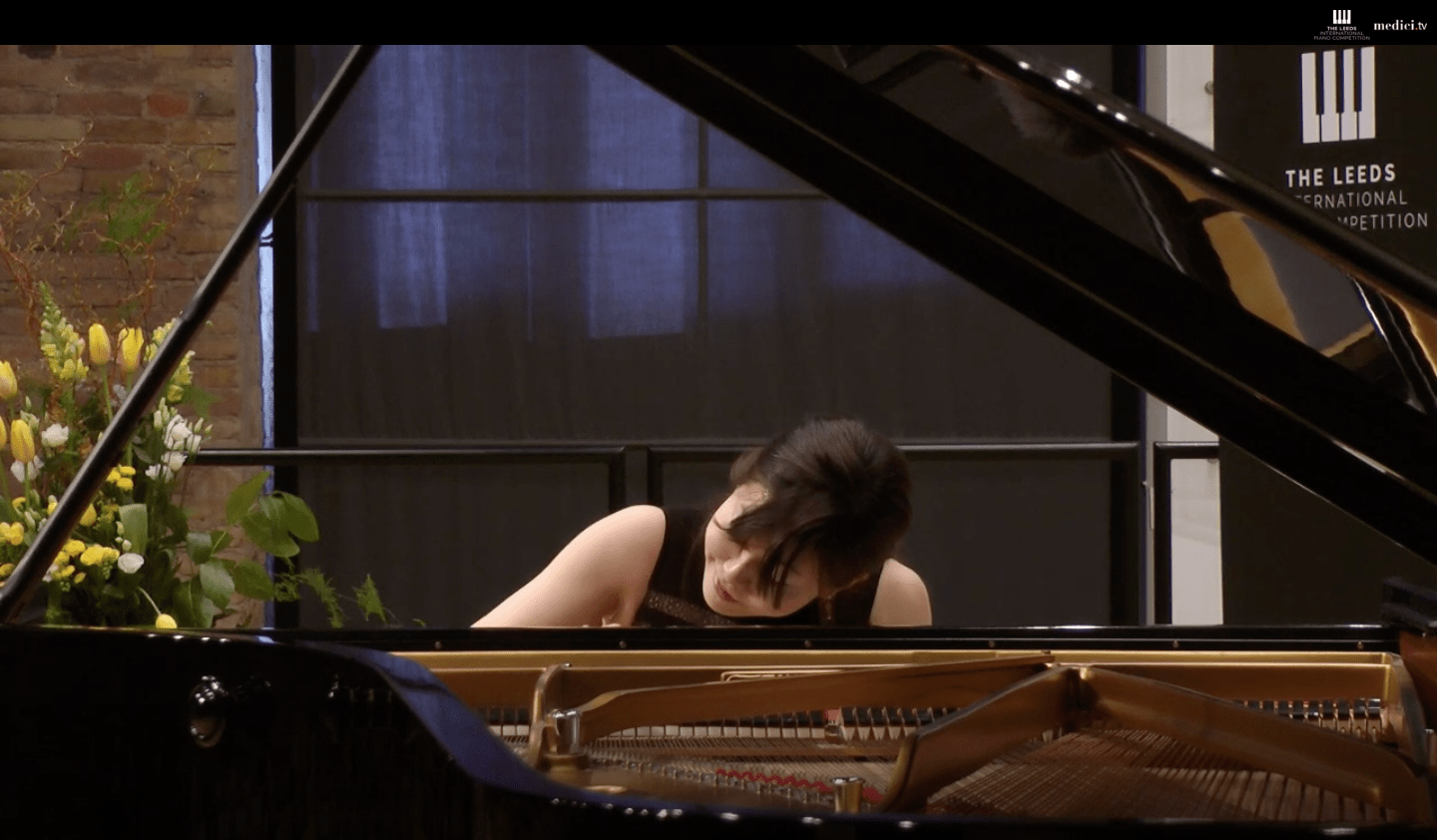
Photo source: https://www.leedspiano.com/ and https://leedspiano2018.medici.tv/replay/
 Literally Left-handed
Leave a comment