
Group 4
Andrzej Wiercinski (Poland)
Wei-Ting Hsieh (Taiwan)
Pavel Zemen (Czechia)
Taek Gi Lee (South Korea)
Andrzej Wierciński, 22

Joining the by-now well-established tradition of presenting two contrasting sonatas in the First Round, Andrzej Wierciński presented Scarlatti’s Sonata in G Minor, K. 450 and Prokofiev’s Sonata No. 7 in B Flat Major, op. 83.
I’m not saying this because Andrzej is Polish, but there was definitely a Chopinesque touch to his performance of Scarlatti. Maybe it’s also because the Scarlatti piece actually reminded me of Chopin’s polonaises, with its march-like quality.
Despite following the repeats marked in the sonata, Andrzej kept the brief piece interesting. His repeats didn’t sound repetitive at all, if that makes sense. Somehow he played every passage differently the next time. I enjoyed this charming performance of Scarlatti.
After that came the staple piece of Andrzej’s programme, the most popular of Prokofiev’s War Sonatas, and one of the most popular pieces played at piano competitions. Sometimes I wonder why one would choose such a popular piece to play in competitions. The expectations are much higher and there’s more at stake. Before he started, I wondered how Andrzej could surprise me.
His playing did not surprise me, but it really captivated me. Throughout the performance, I had a constant unsettling feeling that kept me on edge, even in the second movement, making the luscious melody in the beginning sound superficial and mocking. Considering the context of the sonata, I think Andrzej captured the essence of the piece.
Even though Prokofiev’s music has been considered “percussive” and “violent”, Andrzej never resorted to blindly bashing the keys, and that I thought enhanced the tension of the performance. There was no uncalculated release of tension. On the subject of tension, Andrzej really created a lot of tension through the use of time to suspend, especially before the return of the melody of the second movement, at around 18:40.
A constant point of layman discussion about the sonata is how fast you can / you should play the final movement, which is ambiguously marked Precipitato. Andrzej didn’t take it too fast, but kept a very steady rhythm, which I feel is key to building the excitement that bubbles throughout this final movement, but I don’t understand why he had to speed up towards the end. It just made everything sound messy and kind of ruined the ending for me. Still, all in all, Andrzej delivered a great performance of both pieces, and I look forward to hearing him play an early Beethoven sonata and an early Chopin scherzo in the second round.
Listen to Andrzej’s first round performance here: https://leedspiano2018.medici.tv/replay/first-round-with-andrzej-wierci%C5%84ski/
Wei-Ting Hsieh, 22

Another 22-year-old, Wei-Ting Hsieh from Taiwan was quick to open herself up to the audience, showing her emotions and personal enjoyment of the repertoire she has chosen for her first round, which were Mozart’s Sonata in D, K. 576 and Granados’ Goyescas No.1: Los Requiebros.
Wei-Ting’s Mozart was very melodic, with nicely drawn long lines. She really put a personal, expressive twist on it, like adding a flower pattern on a simple cup of cappuccino. It showed Mozart at its brightest, most innocent and tenderest, which is a delight to listen to.
Granados’ first number from his legendary piano suite Goyescas, Los Requiebros (Flattery), was apparently inspired by Francisco Goya’s painting “Capricho, Tal para cual“, which is based on a dance form called the “ajota”. And so dance influences painting, which in turn influences music. Art is not, and should never be, restricted to one media of expression.

Wei-Ting’s performance of Los Requiebros certainly reflected its dance-like origin, added with the psychological depth of Goya’s brushstrokes and touched up with Granados’ ever-colourful chords. Her playing was very nuanced and intricate, but she never lost sight of the melody because despite Granados’ rich chords, Wei-Ting doesn’t overdo the sustain pedal, which I think was a great thing. Plus, who doesn’t love a good Spanish tune? Wei-Ting’s expressiveness made you feel like she wanted to get up and dance herself. Okay, maybe that was a bit exaggerated, but she was definitely bubbling with excitement. Her performance was very enjoyable because she herself enjoyed it so much.
Wei-Ting will be playing Schumann’s Fantasiestücke, op. 12 and the first book of Debussy’s Images in the second round.
Listen to Wei-Ting’s first round performance here: https://leedspiano2018.medici.tv/replay/first-round-with-wei-ting-hsieh/
Pavel Zemen, 25

His hair nicely combed, sporting a patch of mosutache on his chin, wearing a tight-fitting raisin coloured suit with matching-coloured socks, Pavel Zemen was surely one of the most fashionable candidates in the Leeds this year. But if there’s one thing that’s immune to vanity, it is classical music, and Pavel didn’t seem fussed about his appearance; it seems to come naturally to him. For his first round, he played Bach’s C sharp minor Prelude and Fugue from Book I of the WTC, Rachmaninoff’s Étude-tableaux in D minor, op. 39 no. 8 and Scriabin’s Fantasie in B minor, op. 28, a piece played by Evelyne Berezovsky in her first round performance as well.
Pavel’s Bach is full of passion and sentiment. He added much rubato to it, and highlighted the intensity of the dissonant clashes to reflect his own emotion. I was surprised when he decided to take the stile antico fugue–it’s termed that way because the subject imitates the ancient style of Church chants–at a much faster speed than usually played, but the result is a flowing line that gathers in complexity as more voices join it. It becomes even more complicated when Bach decides to combine two different subjects together, or overlap a slower version of the subject with a faster one–a technique called stretto–but Pavel didn’t seem to mind the difficulty; all that seemed to be on his mind was the growing emotion in Bach’s music. I thoroughly enjoyed this performance of a Bach in the first round.
Next up was a Rachmaninoff etude. Frankly, I don’t have much to say about it. It was nice, but at times I didn’t really know where the music was going.
Closing with Scriabin’s Fantasie was definitely the right choice for Pavel. Having heard it once from Evelyne Berezovsky, then downloaded it onto my phone and listened to it a few more times, I can safely say that I am now pretty familiar with the piece, and it’s still growing on me. Pavel was different from Evelyne. He had eyes on the power and intense passion of the music. Both were technically perfect, but whereas Evelyne highlighted the complexity of music and the texture, for me, Pavel went for the heavy chords, and the power on the climax in B major was immense! It was a breathtaking performance, and left me a very good impression of Pavel, not only because of the way he dressed.
Pavel will be playing more Rachmaninoff, Chopin’s Barcarolle and Barber’s epic Piano Sonata in the second round. I’m excited for more epicness from Pavel!
Listen to Pavel’s first round performance here: https://leedspiano2018.medici.tv/replay/first-round-with-pavel-zemen/
Taek Gi Lee, 21
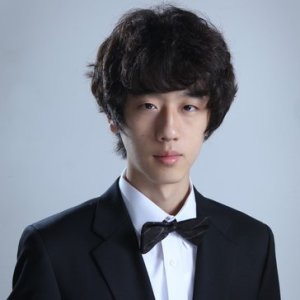
Taek Gi Lee may be young, and he may have a baby face, but his playing is full of profound feeling. For his first round, Lee (sorry, calling him Taek seems a bit weird!) played Bach’s 22nd Prelude and Fugue in B flat minor from the Well-Tempered Clavier: Book I and Liszt’s monstrous Dante sonata (Après une lecture du Dante: Fantasia quasi sonata).
Lee seemed to be playing in a church when he played the Bach. His contemplativeness, the resonance of his playing, the way he made the piano sound a bit like a choir, made everything sound holier. It was really beautiful.
And suddenly we are plunged into the depths of the 9th circle of Hell with Liszt’s Dante sonata, where he portrays the wailing souls in Hell. To be able to play such a ferociously difficult piece, with all the octaves and chords and repeated octaves and repeated chords, one must somehow make a pact with the devil to be able to play such a devilish work. And so the audience is confronted with a bizarre image of a devil-possessed pianist performing a work portraying the devil. Was this a summoning ritual? There certainly is something irresistibly fascinating about it…

And then there is this beautiful passage that people have related to Beatrice, Dante’s love interest, from the Divine Comedy. I’d say, at the young age of 21, Lee seems to be more attracted to the prospect of showcasing devilish virtuosity than portraying love. Lee’s technique may be flawless, but he did not make a boring and monotonous job of it in the Dante sonata. He plunged right into Hell and came back in one piece.
Taek Gi Lee will be playing Chopin’s Ballade No. 1 and Schubert’s 19th Piano Sonata in C minor in the next round. What will it be like?
Listen to Lee’s first round performance here: https://leedspiano2018.medici.tv/replay/first-round-with-taek-gi-lee/
Photo source: https://leedspiano2018.medici.tv/candidates/ and Google Images
 Literally Left-handed
Leave a comment