Once upon a time…
There was Frostwire! Do you remember Frostwire, or Vuze, or uTorrent? If you do, you are a certified Gen Z! We grew up having to scrounge for music, whether online or in shops. I still remember the excitement of running to the classical music section in an HMV store and finding Lang Lang’s newest album.

Then my smile would drop as I flipped the CD case and saw the price sticker on the back side. Still, I would sneakily look over my shoulder to see if anyone was looking, and then copy down the track names.

At home, I would boot up the PC, click on the glorious Frostwire icon, and download music to my heart’s content like a certified hacker. And there, after hours of frustrated waiting and apocalyptic buffering, the complete Lang Lang album would appear on my desktop in a .zip file, probably with a name like:
Langlang_pianoalbum_blahblah_full.zip
And then I would unzip it with 7zip and the mp3 tracks would be there in all its glory.
Ah, even just writing this brief anecdote brings a wave of nostalgia over me.
Can’t relate?
Well, I wouldn’t be too surprised if you can’t relate. Maybe yours is a story of shoplifting cassette tapes or borrowing someone’s Walkman and never returning it. Or even better, record players and listening to the hiss as much as the music!
In that case, I’m sure this sense of nostalgia will be all too familiar to you.
And if you don’t relate to any of these scenarios, if music has always been to you a touch of the screen, then consider yourself privileged.
Age of Apple Music and Spotify
Anyways, what I’m trying to say is that nowadays, our experience of listening to music is largely defined by large-scale streaming services such as Apple Music (final evolution of iTunes) and Spotify.
These platforms make listening to music so convenient, we often forget the great lengths people go just to listen to music in the old days.
Hell, in Mozart’s time, you were only allowed to experience a slice of the genius’ mind if you were BORN in a rich family.
But this isn’t just about convenience. Apple Music and Spotify has changed the way we perceive music.
And conversely, music has adapted itself to the age of Apple Music and Spotify.
5 Observations on the Age of Apple Music and Spotify
1. Wider reach.
With millions of users, these oligopolies of the music industry has allowed music to reach the ears of more people than it has ever done so.
2. Rise of the playlist.
With streaming services came the concept of playlists. Now, you can choose music according to your mood or genre. Different music is grouped together in ways not done before. It gives you access to many different artists easily and leads to new discoveries on the daily.
3. Singles over albums.
In pop music more often, the norm has always been to hype over a single track (or two) in an album. With the dawn of streaming platforms, singles can be released on their own, thus greatly reducing the cost of producing a full studio album. A great example I can think of is Billie Eilish’s “my future”, which got 1.3 million streams on the first day it was released.

4. Increase in quality of recordings.
Now that technology has perfected the art of preserving sound, and music is being listened to up close (straight into your ear through bluetooth earbuds) artists not only compete at producing stimulating music, but also high-quality stuff. Thumping bass that makes your heart throb, vocals that surround you like Dolby digital 4.1.
5. Shorter duration of music.
With millions of choices right on their screen and no strings attached, users of streaming platforms can click off your music anytime they want. It is the artist’s job to grab the attention of the listener.
It also means that with more choice, attention spans are shorter. People want to try everything, and if you occupy more than ten minutes of their time, you’re basically wasting their lives. Bad news for classical symphonies and concertos; or is it?
What does this mean for classical music?
From my observations, I think positives do outweigh negatives for classical music in the age of Apple Music and Spotify.
Firstly, these streaming platforms make it possible for classical music to reach the ears of many, many people. Even if they are just students wanting some relaxing music to study to, we must admit that more people know the name of “Moonlight Sonata” and “Claire de Lune” than ever before. And yes, many in the world of classical music may consider these pieces overrated, but they are masterpieces nevertheless. According to this very interesting article about the effects of streaming on classical music, Paul Lewis’ recording of the slow movement of Moonlight reached 49 million plays. I doubt you’ll be able to sell 49 million albums of a classical musician, or any musician, for that matter!
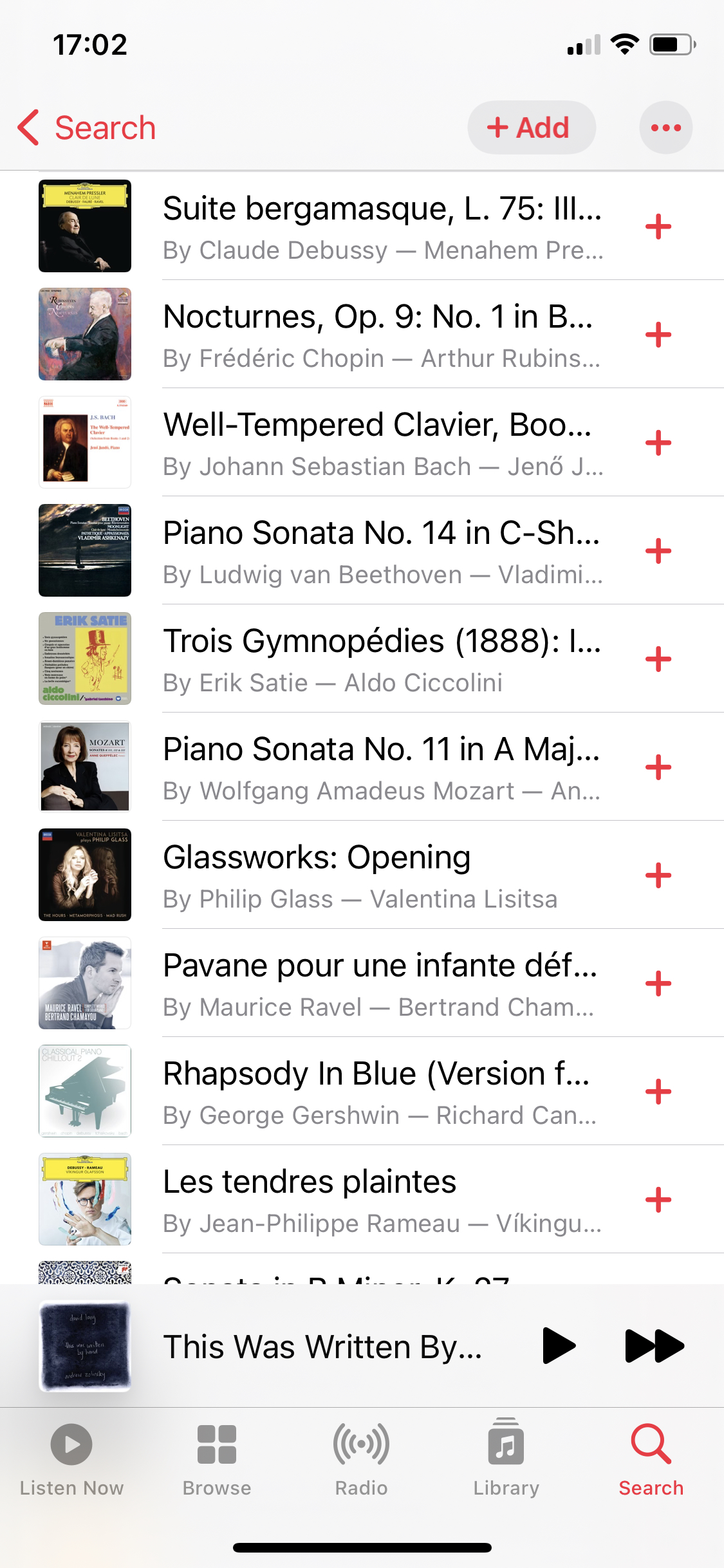
Secondly, playlists allow a more indiscriminate listening of classical music. As someone who knows a bit about classical music, I am always surprised to see Satie and Messiaen placed next to Bach and Chopin in a Relaxing Piano Essentials playlist. And I think that’s great! It expands the common man’s horizon of classical music like never before. Plus, you can discover more classical artists that way. It doesn’t have to be Andras Schiff playing Bach, or Vladimir Ashkenazy playing Rachmaninoff, or Krystian Zimerman playing Schubert (even though they are obviously great too). It could be Eric Lu playing Chopin, Hélène Grimaud playing Mozart and Alice Sara Ott playing Grieg.
Finally, everyone loves a high-quality recording and lots of hype surrounding it, no?
The Negatives
Are not really negatives. They are ways in which classical music can adapt and improve. Classical music doesn’t always mean three-hour Wagner operas or hour-long Mahler symphonies. They can be bite-size but charged with meaning too. Put in some effort in making a video for it to suit the music and it can be just as stimulating as a music video by Beyoncé or Kendrick Lamar. In fact, here are a few examples:
Igor Levit plays “Ode to Joy”:
Vikingur Ólafsson plays Rameau “Les Boréades”: The Arts and the Hours (Transcr. Ólafsson):
Anthony Roth Constanzo’s Music Video of Philip Glass’s “Liquid Days”:
Obviously, these are just some of my observations about the changes in the music industry and ideas about how classical music can adapt to it.
If you have any more observations, or links to cool music / music videos please share with me in the comments below!
 Literally Left-handed
Leave a comment