
1. To get out of the hectic humdrum of undergraduate life once a week
You quickly check your watch as you save the notes to “Lecture 11: George Eliot” and shut the laptop, stuffing it into your bag already crammed with Bach and Chopin. Just about enough time to get to the station and make the 1436 train. Perhaps a quick nip to Greggs for a sausage roll, even? Don’t want to play on an empty stomach.
You say a quick goodbye to your friends, promising them you’ll be there for the bar crawl tonight. No, won’t make it to pres* unfortunately.
*Pres: pre-drinks session before the real party. In reality this is where most of the real drinking happens.
You walk quickly out of the lecture hall doors. A few obstacles along the way–brief smiles, slight nods of the head, a few “you alright?”s–and you’re out. Can’t help being a people person, can you?
Outside, you groan. Raining, again. Classic Durham weather, inevitable in winter every day between 1300 to 2000. That’s why your Timberlands are worn and torn while your Stan Smiths are squeaky clean. You plug in your AirPods, flip up your hood, and begin your pilgrimage to Durham Station. A brisk walk will do for now; you have to save energy for the uphill climb later.

It’s all worth it, you tell yourself, as brown flecks dot your Timbs and your jeans begin to wrap themselves tightly around your thighs. But as Greggs comes into sight at the end of Elvet Bridge, you groan again. A long queue of hooded monks snake out from the shop entrance, all eager for their post-lecture munch.
Damn those Bailey College* bastards, you think as you steamroll past the only point of respite on your gruelling pilgrimage, famished and fuming.
*Bailey College: colleges on the Bailey, i.e. in town, as opposed to colleges up on the hill. Those privileged kids know nothing about the effort to walk into town to do grocery shopping.
With nothing to look forward to, you go on autopilot mode, and the rest of the journey becomes a blur as you nod to the rhythm of Mendelssohn’s Octet, your most recent earworm. The local teenagers wheelie-ing around Durham Square; the old man playing his accordion in the middle of Framwellgate Bridge; the miserable, old white men sitting outside The Three Bridges, eyeing up young pedestrian girls as they down their pints of Stella; a random troupe of middle-aged women wearing ultra-short skirts with way too much tan on, led by one woman wearing a tiara and a sash that says “New Bride”, shouting and screaming down North Road. All these pass you by as your legs focus on the station at the top of the hill.

Perhaps it was a good thing you didn’t stop at Greggs. Soaking and breathless, you just about manage to pull yourself up the steps to the platform as you hear the loudspeakers announce the arrival of the mercilessly punctual 1436 to Newcastle.
2. And blend into the anonymity of Newcastle city
As if your day cannot get worse, there are no seats on the train. Absolutely none, unless you want to sit next to that old man by the window with a can of beer in his hand, performing an exorcism with every exhale. No thanks. You’ll just stand at the doors and look outside.
As the train pulls away from the station, the whole of Durham unfolds before you for a brief moment. The unstable stone paths full of potholes weaves together into a tapestry of cobblestones; the dull-grey brick buildings unite to form rows of stony humility, relics of history and wisdom. From the high vantage point which the position of the train window provides you, the picture of this little world, frozen in time and unaltered by modernity, is completed by the Cathedral, the towering structure that endows meaning to the small community surrounding it, whose heads poke out here and there from amongst the dense greenery.

The sun briefly peeks out from behind the clouds, and a ray of golden sunlight rests tenderly on the walls of the Cathedral tower. With the second movement of Mendelssohn’s Octet gently caressing your mind, it’s hard not to feel sentimental. You let the moving forms slide across your vision as daydream into different realms.
After a blur of fields and tunnels, the glint of the Tyne River catches your weary eye, and before you know it, the ground beneath the train opens up and you are traversing the grand river itself, glistening and sparkling ever more brightly under the sun, which has freshly awakened from its nap behind the clouds.
And just as quickly, the landscape changes. The symmetry of steel extends its welcome to you as the train crosses the Tyne Bridge, and sharp angles and defined shapes impose themselves on your imagination. Words announce themselves before you can guess at what they represent: Novotel, Travelodge, Times, O2. You are jolted awake by the sight of office interiors, glass buildings, graffiti, apartments to let–signs synonymous with constant movement and activity–even before you can pull out your AirPods.
Already, people are moving within the carriage. Impatience bubbles as some take longer to haul their bags off the luggage rack, and men in suits suddenly materialize before you, restlessly shifting their weight as they wait to get off.
You have barely enough time to stuff your AirPods back in their case before it’s go time. The carriage doors open and the glaring lights of Newcastle station bear down on you. There is no time to think. The feet do the thinking and thousands of feet carry you along with them. You must produce your train ticket without a moment’s hesitation. Hesitate at the barrier and hundreds behind will throttle you with their impatience.
Miraculously, and slightly shaken, you make it out into the open, but the sun has already lost its interest in your affairs. It has left you for Monument up ahead, and you can just make out the silhouettes of the white stone structure basking lazily in its glow.
The Gothic spires of Newcastle churches press their shadows on you, and you sense the darkness beginning to take an interest. Innocent, unsuspicious you. You, who cannot bear to ignore its pleas. Sir, do you have any spare change? I haven’t got any money to travel home, sir, I just need a few quid to stay in a hostel. Sir, do you mind buying me a pack of cigarettes? Sir, are you new around here? Do you want me to show you around? Sir, come and let me—
No matter, you spot a Greggs in your peripheral vision. A beacon of hope. You head straight for the sausage rolls.
3. To take off into the peace and quiet of the Northern countryside
“Next stop: Jesmond.”
You look up from your copy of the Selected Writings of John Ruskin.
No, of course you are not that interested in Ruskin’s thoughts about Gothic architecture. You are holding the book at an angle so that a pretty girl with curls poking from under a red beret, with a vintage scarf round her neck might take a fancy to the reader himself.
No such girl has presented herself on this Metro journey so far, nor has one ever presented herself on any of the previous Metro journeys. The steady stream of people boarding and alighting consist of only a few types: the blazer-wearing schoolgirls and boys; the girls wear torn and stretched-out leggings, while the boys, all sporting the same skin fade cut, have their shirts untucked, loose school ties desperately clinging to their necks. All of them are plugged in to their phones.
Then there are the commuters, their smart overcoats hiding the fact that their shirts have absorbed a whole day’s sweat. Nevertheless, no cotton of higher quality can conceal the stench of eight hours of stress and smoke. They will take out a battered copy of a novel, perhaps a John Grisham, and immediately fall asleep.
Finally there are the large-sized middle-aged women, their–shall we say–greatness amplified by the amount of plastic bags they carry with them as they pile into the carriage. There are always a few of them in each carriage, on the prowl for a poor, small boy that they can squeeze against the window as they settle their mighty bottoms and heave their almighty sighs.
Among the few types the worst are the “yutes” with their bikes. They often come in threes or fours, bringing with them their bikes and terrorizing the unfortunate individual who happens to be in their territory. Well, terrorizing in the form of speaking and laughing so loudly and pungently it is impossible to ignore them. You pray every time that these gangs of trackies-wearing “yutes” do not select your carriage for their clangorous congregation.
It looks like your damsel in distress will not materialize today. Jesmond is the end of the middle-class region of Newcastle; the youth demographic after the aforementioned station does not hold much interest to a Ruskin-loving young man like you.
Disheartened, you turn your gaze to the window. Outside, the sky is a mixture of blue and purple, with tints of orange here and there. The colour gets more intense as you lower your gaze towards the horizon, and through the blur of trees rushing past the train, the golden yolk presents itself in the glorious moments before its daily death. You squint and try to capture a better image of it, but you cannot. Now matter how clearly it appears to you, you cannot properly take it in. You cannot define its edges, you cannot tell where it begins and where it ends, you cannot pinpoint its location even as you are looking straight at it. In its final moments it imprints its death on the sky and boy, is it a beautiful one.

For some reason, a Ruskinian thought finds its way into your mind as you drift off to sleep: “Is this how the sun sets on the British empire?”
4. To play music in the warm confines of Mr Murray’s home
Outside the station, the sky is now semi-dark and it is raining. Still tingling and feeling slightly vulnerable from a foreshortened nap, you pile out into the wet and cold along with the others.
The cold. Must protect the fingers. You blow frantically on your fingers, trying to get them warm enough for the lesson.
After a short walk, a brief period in which your senses inform you of the evening birdcalls, the off-season flowers and after-school marijuana tasting sessions, you arrive at Mr Murray’s door.
There is a blue plaque next to the door which says Joseph Haydn lived here from 1778 to 1785. You remember naively asking Mr Murray whether that’s true.
Embarrassed by that memory, you look away and ring the bell. You count ten seconds, listening for the slight creak of the floorboard within the house. There it is, and the door opens.
Familiarity greets you like a warm cup of Rooibos after a day of trudging in the cold. Your senses settle as you are greeted by that friendly smile, that same way of saying “come in”, and that same sound of someone else plodding the piano keys in the other room.
You take off your shoes and enter the piano room. A small boy is playing through his Grade 3 exam pieces, stuck on a particular passage. His mother is on the edge of her seat anxiously watching, words of maternally motivated criticism right at the tip of her tongue. She manages to force a smile, out of curtesy and propriety, as you take a seat next to her, but her mind is all over the keyboard, tutting and clucking over her son’s shoulders. To ease any unnecessary awkwardness and tension, you turn to Ruskin again.
Mr Murray is patient with the little boy, and after some more friendly encouragements–and a few comments from the sidelines by the mother–the lesson finishes. You seat yourself at the piano and warm up as Mr Murray sees the little boy and his mother out the door.
The great thing about Mr Murray is that he lets you play whatever you want, even if you don’t have the technical capabilities to do so yet. And so, like an enthusiastic puppy, you rifled through some of the biggest works in the standard piano repertoire and landed on Ravel’s “Gaspard de la nuit”, a formidably difficult suite for piano solo. You proudly proclaimed last lesson that you will master this piece by the end of the year.
He sits back as you begin the tremolos in the right hand which open “Ondine”, the first piece in the suite. You immediately get stuck. The rest of the piece is not worth mentioning, because you have no idea how you managed to get to the last chord. But even as your mind becomes a whirlwind of panic and distress, even as your fingers become stiff as the victims of Medusa, you glimpse in the peripheries of your vision his serene expression, fully absorbed in the music.
And when you finish, he smiles that familiar smile and simply says, “Well done. This is coming along nicely.” And even though it’s nothing close to the truth, you cannot help but feel rewarded. That comment alone is sufficient to remind you that making music is not a torturous process towards perfection, but an enjoyable one. You want to play it again, with renewed enthusiasm. And so he lets you.
No, you aren’t completely satisfied with yourself this time round either. You know where you could’ve done better, where you could’ve practised more, where you painted with your fingers Ondine as a clumsy, middle-aged woman instead of the youthful, flirtatious spirit that she really is. He listens as you tell him all that, and he smiles.
He interjects once in a while, suggesting a different fingering or drawing out a different possibility for phrasing, and you nod because you are amazed at how you managed to miss that detail even though it makes so much sense. Otherwise, he simply chuckles and says, “yes, that really is quite difficult, isn’t it?”
You play through your repertoire and have a good time of it. He lets you take the reins of the lesson and play as much as you want. The more he lets you play, the more you want to play. Today, thanks to the length of your repertoire and the punctuality of the next student, who just so happens to be of the opposite sex, you even experience the exhilaration of showing off some hard-earned Lisztian virtuosity. You figure Liszt must have been high off this kind of experience every day of his life. You develop a profound liking for Liszt right there and then, inasmuch as you manage to play his easier piano pieces.
As you gather your things in a hurry to run for the 1815 train, Mr Murray casually asks if you’d like to play in his student concert next month. Certainly, you say, if you can get the Ondine ready in time. You are excited, because you want to perform this piece now. It may not feel ready, but you are confident you enjoy playing the piano. You are very confident about that. You want the concert to be tomorrow, so you can enjoy that exhilarating feeling again. For some reason, the idea that the piece isn’t ready seems to be the furthest thing from your mind.
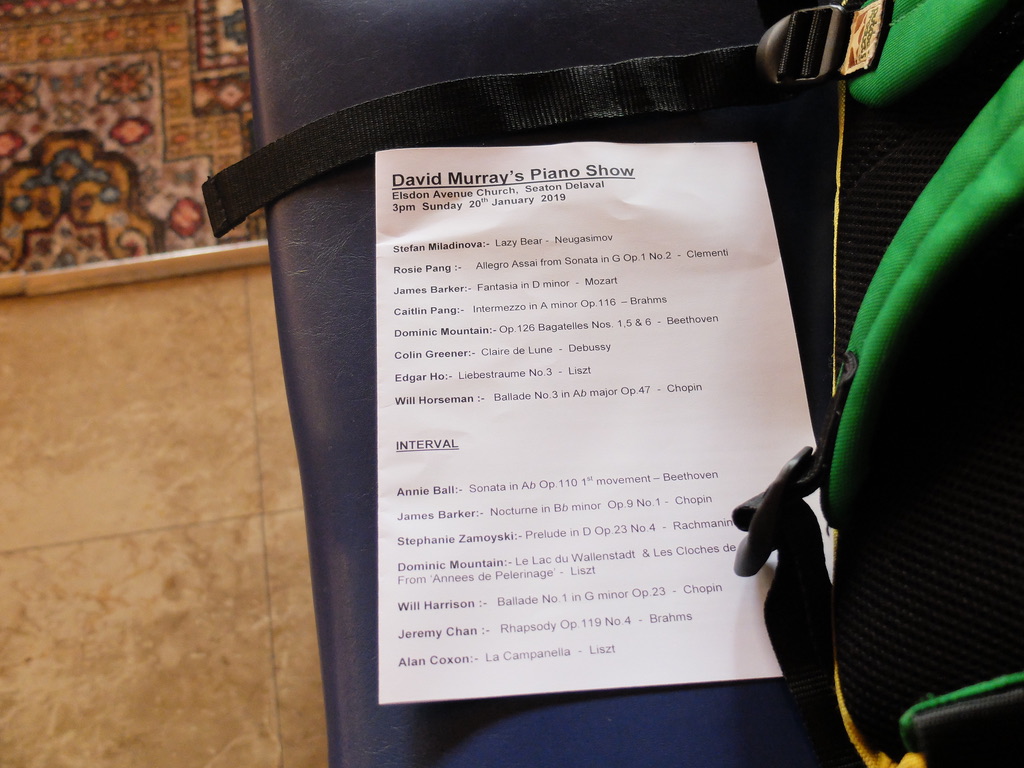
Outside, rain is falling steadily. It is cold and the sky is completely dark. The potholes are filling up with muddy water but as you run to the station, you feel the urge to listen to “Gaspard de la nuit”. You plug in your AirPods, dance to Lucas Debargue playing “Scarbo” and sway to Martha Argerich playing “Ondine”.
A world of possibilities opens up. You feel capable of playing anything. You feel powerful. You want to tell someone about this feeling. You are standing alone in the station in the dead of winter, watching the board as the minutes count down towards the arrival of the South Shields train, but listening to Ravel, you feel that something great is nigh.
You look forward to a pint in the college bar later this evening.

5. And to renew your vows to music
Fast forward to a year later. The past year has been such a blur. You can’t quite grasp how much time has passed, what you’ve done and how you’ve got here, but here you are in London, in a practice room in the Guildhall School of Music and Drama.
You are sitting before a beautiful Steinway, and as you stare at the copy of Bach’s Well-Tempered Clavier, wondering for the umpteenth time how you can play four voices simultaneously with ten fingers, you notice the shadows lengthening across the semiquavers.
Looking up, you see the snow swirling outside the window, dancing their chaotic ritual dance around the concrete pillars of the Barbican Centre. The sliver of sky you see beyond the window is beginning to blend with the grey structure which wraps itself around your vision. Evening is falling fast on London.
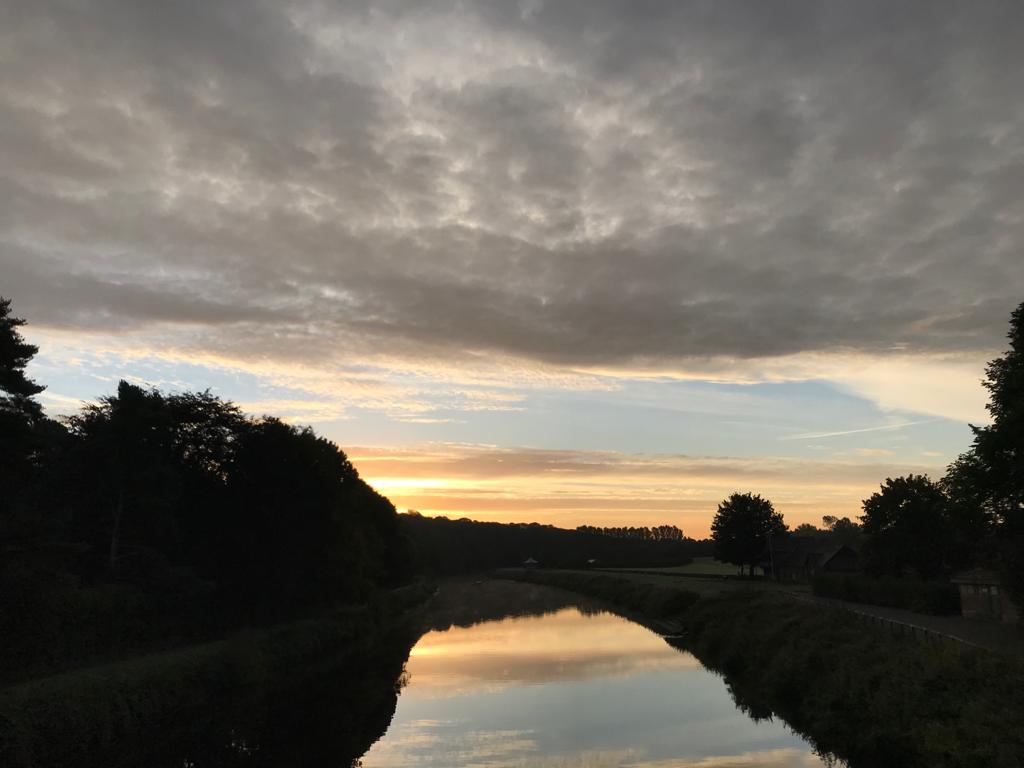
Suddenly you remember the sunset of the North, the explosion of orange, yellow and purple that was always the last thing you glimpse before you fall asleep on the rattling carriage. And with that you remember the Tuesdays where you had to make the pilgrimage to Durham station. You remember the tiredness but also feeling of satisfaction when you finally arrive from Newcastle–sometimes after having missed a train and then to wait in the cold–just as undergraduates in fancy dress costumes holding six-packs begin to totter around the cobblestone town.
And of course, you remember the feeling of playing and–most importantly–enjoying music with David Murray.
Sitting in front of your Steinway, you feel warm. You remember why you’re here. As you listen to the faint sounds of Rachmaninov concerti and Prokofiev sonatas, Chopin ballades and Scriabin etudes coming from different practice rooms down the corridor, you realize that somehow, the little pretentious literature student that you were a year ago is now part of the symphony of sounds echoing the columns of a cultural institution.
You are happy you made all those train journeys Mr Murray’s house a year ago. You realize now that studying with Mr Murray has made all the difference, and you don’t want to forget that pure joy of performing and playing music you discovered at his home not a long time ago, a long way up North.
Happily, you return your attention to the Bach fugue sitting in front of you.
Afterword
I would like to dedicate this little piece I wrote to my former piano teacher, David Murray. No, he’s not dead, and this is not an epitaph, I just want to show some gratitude, is that alright with you? Mr Murray, if you’re reading this, thank you for all those lessons for the past two years, they have brought me tremendous joy and has given me a fresh outlook on music that has shaped me into who I am today.
But as you can probably tell, this is not just about my piano lessons, but is also a nostalgic account of my undergraduate life. Because of COVID, I wasn’t able to graduate the normal way and end my undergraduate career with a bang. But now, as the pandemic continues to rage on and I sit at my laptop in London waiting for all this to blow over, I cannot help but revisit the memories of my life up North with nostalgic lenses. This tendency to romanticize is only enhanced by the beautiful sunsets and views God sometimes (and oftentimes) endows on the Northern part of England. Oh well, what harm is with indulging in a bit of nostalgia?
 Literally Left-handed
Leave a comment