
Under the bright rays of the bank holiday sun, I ducked away from the enthusiastic shoppers of Oxford Circus, the floral prints-wearing daydrinkers and the fashionable Fitzrovians into the cool and plush shade of the Wigmore Hall.
To feast my ears on the wonderfully eclectic programme curated by the EXAUDI vocal ensemble and, of course, to attend the Wigmore Hall debut as well as world premiere of the composition of my dear friend, Elisabet Dijkstra: here, now.
I must admit, I came to the concert with nothing but an open mind; I had no prior knowledge to any of the pieces; I only wanted to be entertained. I didn’t even bother taking the programme.
The EXAUDI ensemble, directed by composer James Weeks, is known for performing new music, and interestingly, this programme juxtaposes works by living composers with those before Bach. It made for some very interesting contrasts, as well as similarities.
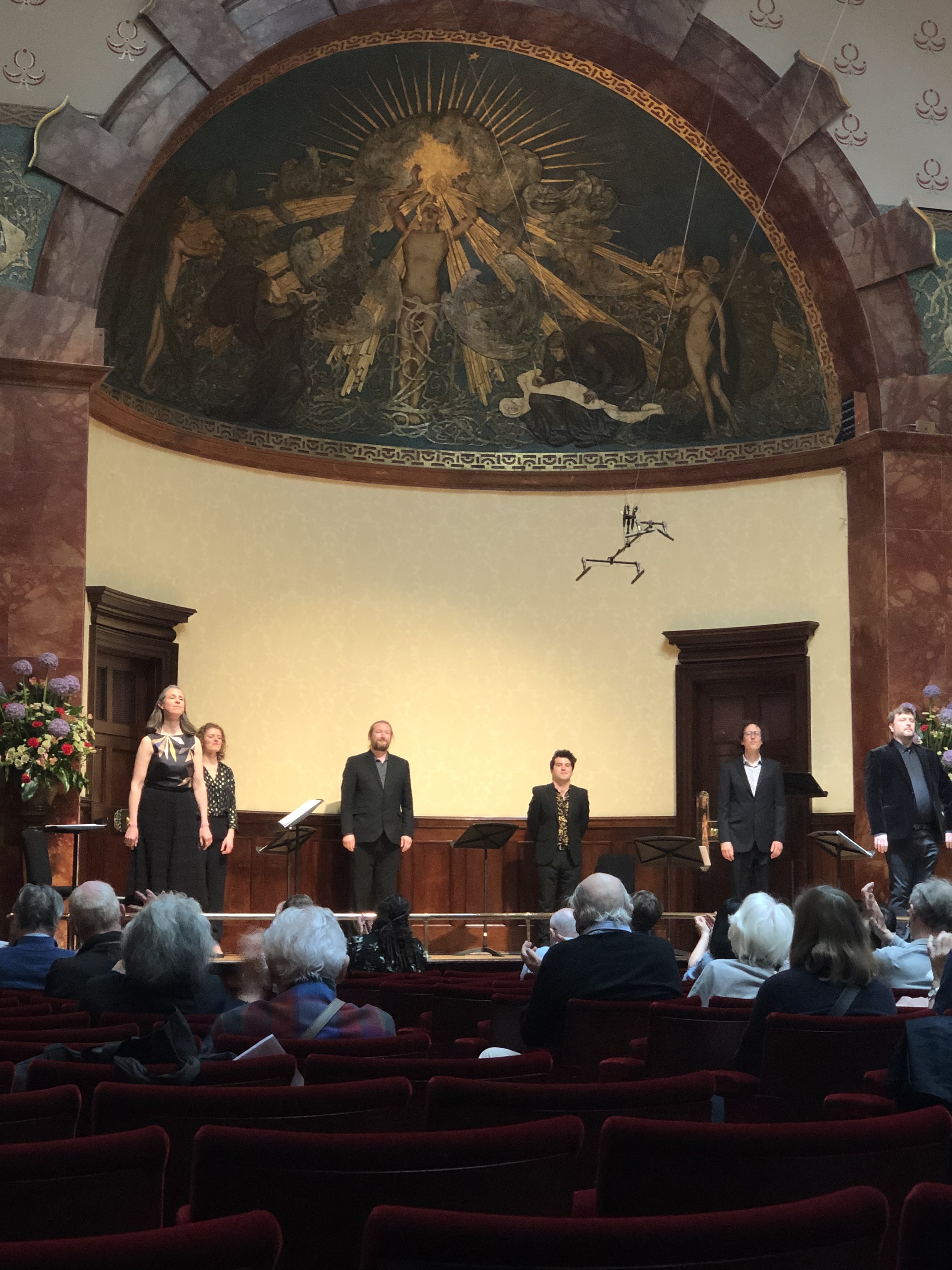
The EXAUDI singers took some time to settle. The selections from Orlande de Lassus’ motets Prophetiae Sibyllarum didn’t quite grab my attention like the later pieces, nor did the singers seem very sure of themselves when they performed this, as if they aren’t that familiar with it. However, the unified sound, the togetherness in their diction, and the resonance they created in this wonderful hall really brought me peace. And kudos to the bass, he really added to the vibration created by the other voices.
Nicolà Vicentino’s Musica prisca caput was next, and the harmonic progression was super interesting. At first I thought the soprano was off, but upon doing some research, and listening to the piece again online, I realized the music was composed in a way I am unused to: it uses diatonic, chromatic as well as enharmonic progressions (i.e. micro-tones)! How avante-garde is that? For sure it merits another listening, and I look forward to discovering more Renaissance music along these lines. Here’s a YouTube clip of EXAUDI performing this short piece:
EXAUDI’s performances of Elisabet Dijkstra’s here, now (2021) and Sylvia Lim’s paper wings (2015) (cleverly placed together, because both pieces exhibit certain similar elements) were nothing short of captivating. Elisabet’s composition, combined with EXAUDI’s resonance and the singers’ impressive ability to sing micro-tones, really created an all-encompassing experience, and endowed the gripping silence with new meaning. It was really special.

I thought EXAUDI really came into its stride in the second half. They were singing much more expressively, connecting with each other. It felt as if they were really settled into the state of performing. I could feel the expressiveness of Luzzaschi’s Quivi sospiri and Marenzio’s O voi che sospirate, even though I only learned afterwards they were settings of Dante and Petrarch’s poems about suffering and misery. There was a different, more humane to this music than the opening motets.
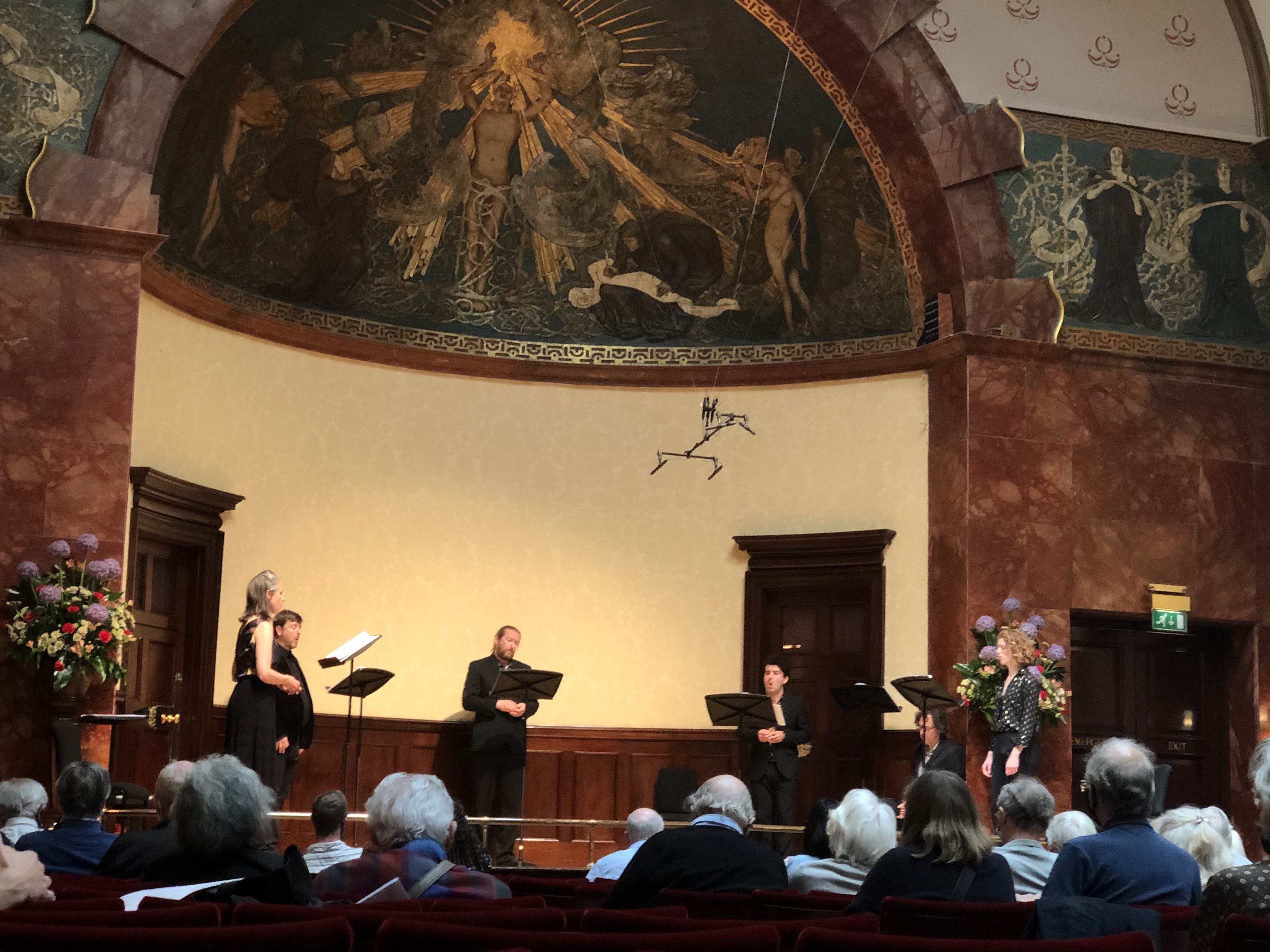
Christopher Fox’s senso comune again brought some new ways of portraying sound to my attention. It was super cool how the sounding of different vowels created different resonances, and the held notes always seemed like an otherworldly sound conjured by the many voices of the singers but possessing an identity of its own. Many times I tried guessing who was holding the note, to no avail. The effect was very eerie. Personally, the micro-tones created a disturbing atmosphere. I don’t know why, but I couldn’t stop thinking about aliens and spaceships. I know this is completely different from the context of Fox’s music, but I think it should be played in an alien horror movie.
The concert closed with four beautiful madrigals by Gesualdo which I thought were really moving; a wonderful way to close a wonderfully eclectic yet beautifully connected programme. I came out of the concert feeling inspired by the possibilities of micro-tones and ready once again to put my faith in the human voice. These two things put together can really open an auditory world that the modern piano is shut out from.
And of course, I was extremely proud of Elisabet. Not many people can boast of their micro-tonal masterpiece debut at the Wigmore Hall at the ripe age of 22.
You can watch EXAUDI’s Wigmore Hall concert here:
Rating:
4 stars out of 5
Feature image of blog post courtesy of Financial Times.
 Literally Left-handed
Leave a comment