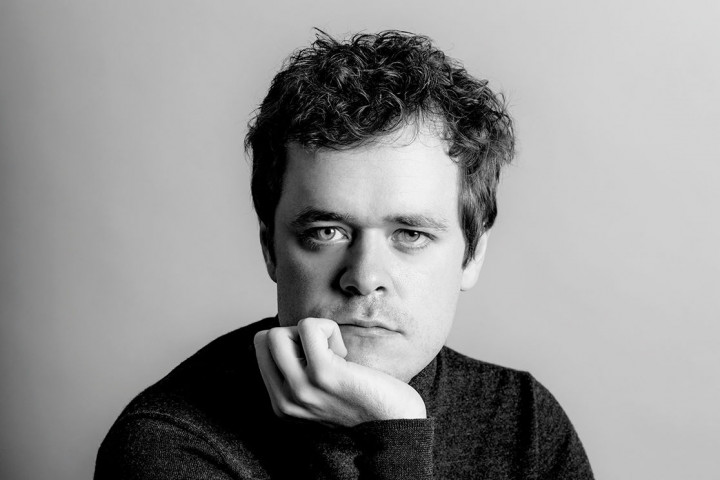
Tonight was my first time attending a concert at Jerwood Hall, LSO St Luke’s, literally steps away from my school. To honour the establishment of my concert-going relationship with this incredible church-converted music hall, I had the privilege of listening to Benjamin Grosvenor’s astounding piano playing.
Jerwood Hall was a peaceful shelter away from the steady hum of traffic and post-work gossip of Old Street. Stepping into it, I felt as if I had entered a hall of meditation–befitting of a church-converted concert hall. The arched glass windows, the bricked walls and the stone pillars retained the dignity of a church, but Jerwood Hall was mostly layered over by fresh wood which contributed not only to its modern aesthetic but also its acoustics. The hall was so quiet I could hear my sleeves ruffling as I settled down. The sharpness of its acoustics gave the hall an intensity which took some getting used to, but as people filed in and started chattering, I began to notice the communal atmosphere of the venue. The seats at the back of the hall were put on stands, while the front row was literally a metre away from the pianist, and on the same level. We were at an intimate distance with the preacher at the pulpit; this was going to be a shared experience.

Through the thick glass windows, I watched the roof of a van pass by behind the clump of trees out in the garden of St Luke’s. It felt like watching fish swim in the aquarium; we were in two different worlds. The evening sunlight bestowed upon the wooden hall a tinge of gold. The trees cast their intricate shadows onto the wooden panel behind the piano, giving it an exotic, tropical backdrop. It was within this otherworldly bubble that I was held spellbound by Benjamin Grosvenor’s playing.
Benjamin began this evening’s concert with Robert Schumann’s Kreisleriana. A composition inspired by E. T. A. Hoffman’s fictional character, a witty, chaotic and eccentric conductor called Johannes Kreisler, the piece–containing eight movements–spans a whopping 30 minutes. I promise you–I do–that Benjamin held the same level of intense concentration throughout those thirty minutes. From the moment he began playing the agitated first movement, I knew this piece was his. By that I mean he played it with great conviction and technical assurance. He held me spellbound not because he demonstrated his technical flair, but because he commanded the performance according to his musical whims. In the slow bits–and there were quite a lot of slow bits–he really didn’t move a single muscle, listening to the chords suspend in the air and dissipate slowly. The slow movement were very intense, especially the fourth movement–Sehr langsam–but it was thanks to the incredible acoustics, which allowed Benjamin to really delve into the music’s most tender depths, that I could feel the ingenious way Schumann uses the resonance of the instrument to create exquisite harmonic changes. Even though Benjamin played the fast movements at breakneck speed, never once did I feel he was out of control. He even brought out the complex counterpoint within the fast moving melodic lines clearly. For me, Schumann’s Kreisleriana, albeit being a dramatic work, is no virtuosic showpiece. Benjamin’s performance was stripped bare of any performative actions; he was completely dedicated to the music and it was through this performance that I experienced the deep contemplation of an artist.
After the mentally exhausting Kreisleriana came Ginastera’s boisterous, quirky and aggressively energetic Danzas Argentinas. As if he hadn’t just played a 30-minute monster of a piece, Benjamin came back out and immediately let his fingers fly over the keyboard. He had immediately switched from being intense and contemplative into being rather light-hearted. He conjured up brilliant colours in the harmonically rich second dance, Danza de la moza donosa (“Dance of the Donosa Girl”). Again, Benjamin was in complete control of the piano in the dizzyingly fast final dance: Danza del gaucho matrero (“Dance of the Outlaw Cowboy”); I could see his head bobbing to the syncopated rhythm of the music. I couldn’t help but whoop as he finished in a cascade of bravura chords.
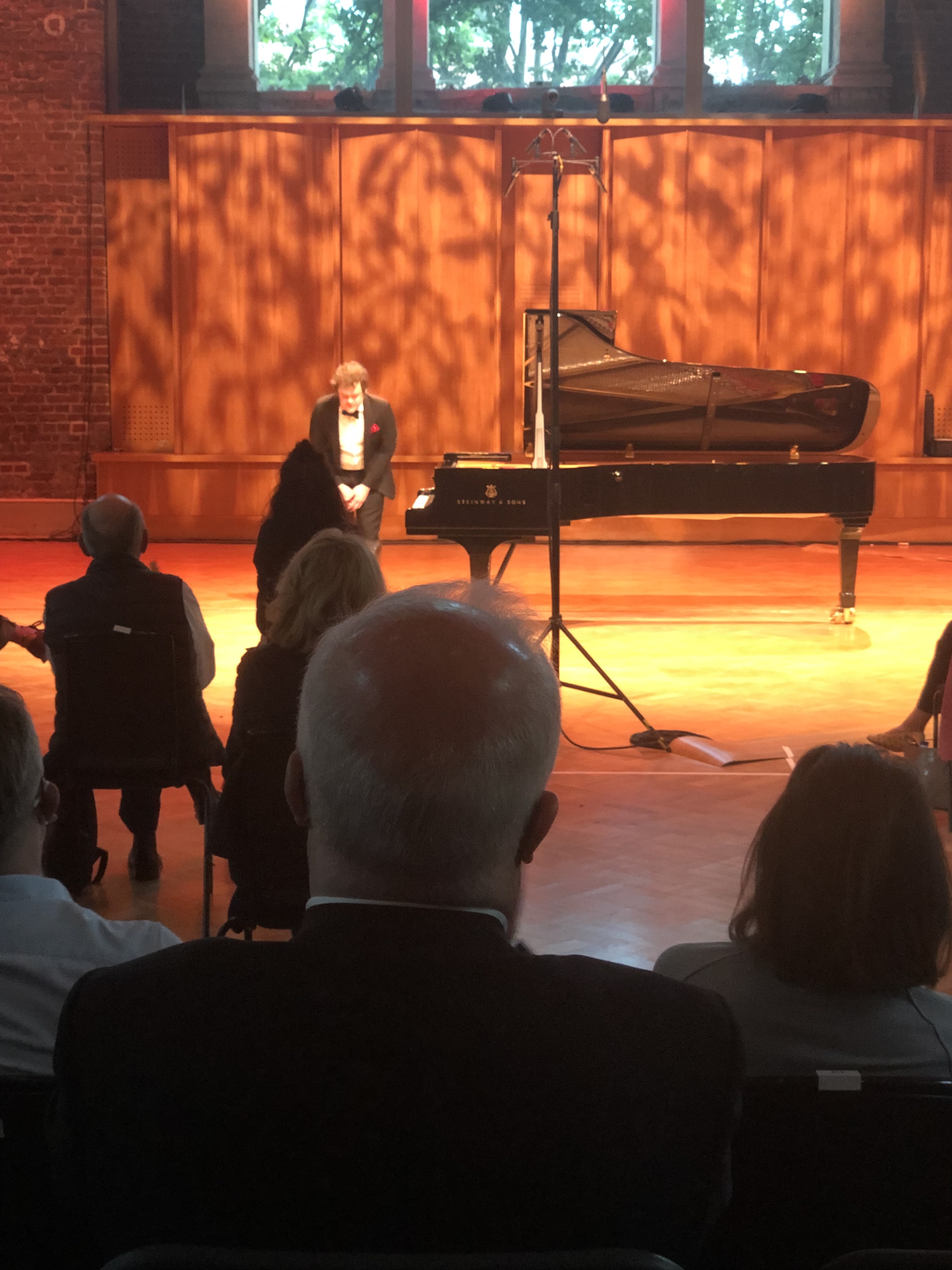
I’ll be honest, I was most excited to hear Benjamin play Ravel’s Gaspard de la nuit. I was obsessed with his recording of this tantalizingly difficult work, and fascinated by how he managed to play it an even faster tempo than I thought possible. The way he opened Ondine shut me up for good. I was literally watching the impossible unfold before my eyes. His fingers were gliding over the keys as if they were themselves possessed by the spirit of the water sprite. They caressed the keys in such a tender way, barely depressing them. I thought it was impossible to make anything sound even with such a Steinway and such a hall, but Benjamin managed to produce the subtlest of sounds even in the trickiest of passages. His Ondine was capricious, and the repeated B flats which represented the toll of bells were handled consistently even as the music grew in intensity, but it was the Scarbo that really brought the evening to a whole other level. Benjamin chose a speed where he was really teetering at the edge, challenging the limits of my nerves as I was gripped throughout the whole piece. Scarbo really jumped out tonight, thundering through the hall as I felt the floor underneath my feet vibrate (I’m not exaggerating!), and then just as suddenly disappearing into thin air. I was completely held at Benjamin’s mercy as he delivered the chilling, heart-stopping tale of Scarbo.
This was probably one of the best piano recitals I’ve been to. The intense atmosphere of Jerwood Hall, together with Benjamin Grosvenor’s spellbinding performance, made for one of the most inspiring performances I’d ever heard. The British should be very proud of their homegrown pianist. He may not be the most highkey of performers, but if he’s ever in town, make sure to go watch Benjamin Grosvenor live. You won’t regret it.
The best thing about writing this review is that you actually have a chance of experiencing what I have just described! BBC Radio 3 will be broadcasting this evening’s recital in separate chunks. Kreisleriana will be broadcast as part of the BBC Radio 3 Rush Hour Concert series, while Gaspard will be broadcast later in September, so stay tuned!
Rating: 5 out of 5
Featured image courtesy of Decca Classics
 Literally Left-handed
Leave a comment