For the past half a year, I’ve come to understand the importance of live performance in classical music. As a classical musician, I’ve been lucky enough to see how London’s classical music scene has bounced back since lockdown, and have wasted no time in immersing myself in it. I have attended classical concerts of all sorts: salon performances, lecture recitals, piano and poetry reading…hell, I’ve even been to a concert where an actor playing Rachmaninoff tells his life story while the pianist performs pieces by the composer interspersed across the dramatic monologue.
The great thing about live music is that, for an hour or two, you place yourself in the hands of the performer. You let them tell you a story. You let them cast their spell on you. You let them take you to another place. It’s a bit like reading a novel. A good novel is one which creates a world for you to immerse yourself in, and when you’re really enjoying a novel you’re not conscious of yourself reading words off a page; you are living the characters’ lives, fighting their battles, loving their lovers, feeling their pain. It’s different to listening to a recording, especially when you’re choosing tracks to listen to on Apple Music, or finding a particular YouTube recording of a piece you’re in the mood to listen to. I would compare such types of listening to music to reading a sonnet, or a particular chapter from the Bible. You read them with an intention of admiring a certain passage, or to feel a certain way, or to experience a sliver of wisdom. It’s not that it’s bad; it’s just different to live performances. Completely.
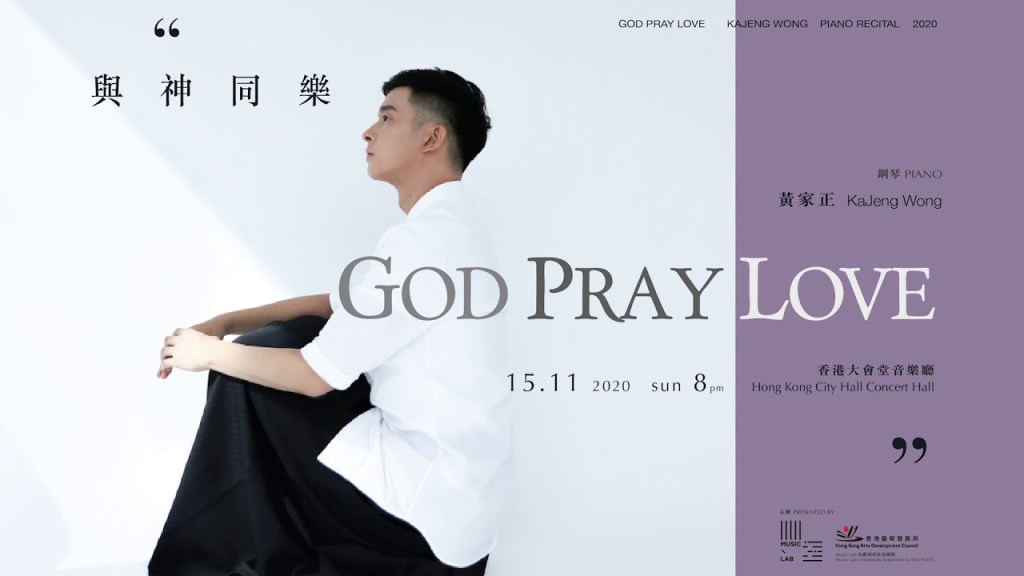
Which brings me on to one particular form of classical concert that really grabbed my attention: the concert designed as a spiritual journey. Of this type I can give two examples which I saw recently: KaJeng Wong’s “God Pray Love” and Alice Sara Ott’s “Echoes of Life”. Both piano recitals, incidentally.
Performance as journey is not a new concept. We see that in theatre all the time. Plays take us into their world, and we follow the characters through the story. In other words, there is a sense of narrative. Of course there is always a sense of narrative in music, but is there always a sense of narrative in a concert? We perform one piece, and then the narrative ends, and then we begin a new piece. But what about an overarching narrative for the concert? Plays are often split into three, four or five acts, but even though there are breaks in between the acts, there is an overarching narrative: exposition, development and ending. What if we can bring that concept into a concert?
I feel privileged to have been invited by KaJeng (or KJ) to his runthrough the day before his church recital of his programme God Pray Love. He designed his programme by splitting it into three parts, with no stop in between any pieces or the three parts: God, Pray and Love. Beginning with the calm Bach/Gounod Ave Maria, emotions swell as we journey towards the centre of the programme, Franck’s “Prelude, Chorale and Fugue”. Passion gives way to peace and tranquility as pieces by Bach are performed to conclude the concert: “Sheep May Safely Graze” and Prelude in C from WTC I. I was absolutely blown away when KJ played for me, and listening to those pieces as part of a greater narrative really elevated my spirit in a way that would have been less so had he performed those pieces separately, treating them as entities of their own. When Bach’s Prelude in C returned–I say returned, because Ave Maria is just a melody built on the Prelude in C–I almost cried. I felt like I had been brought on a transcendent journey, experienced the greatest emotions and passions, and returned to earth. It was then that I learned how touching the most simple melody could be.
I think it was a week later that I went to see Alice Sara Ott’s recital “Echoes of Life” at Southbank Centre. The programme was Chopin’s 24 preludes, with seven contemporary pieces close to Alice’s heart slotted in between the preludes. Behind her was a huge screen which displayed a video of changing abstract architectural structures and shapes designed specifically to match the music. Before she played she told us specifically that she wished to take us on a journey. The visuals were not to serve as a support to guide the music toward a specific narrative, but an invitation to contemplate introspectively.
Personally, I did not think Alice’s concert worked as well as KJ’s; her sound did not project all the way to the back of the hall, and I did not find the visuals pleasing to follow. But still, there was something epic in listening to a concert designed as a grand narrative, and when Alice finished the final piece of the programme I felt as if I had travelled somewhere far away before returning a changed person. This feeling was probably assisted by the fact that the visuals both began and ended with a picture of the starry constellations.
When musical pieces are programmed together in a concert designed as a spiritual journey, I feel there is a greater force at work than the emotional effect of the musical pieces chosen. The separate pieces lose their individual significance as they merge into something greater, a power of pure sound, passion and even mysticism. The effort of striving to play such a huge programme materializes itself and the audience can feel and be elevated by this human striving.
Of course, it is SO much more demanding for the performer to perform such a programme. The mental endurance required is unfathomable. It is probably one of the reasons why Alice cried after she finished playing.
I would love to curate a programme like that someday. I think that is the level where a performer can summon the powers of different music by different composers, regardless of the period they are from, and create a greater power to channel to the audience as they gather for the séance.
Someday.
 Literally Left-handed
Leave a comment