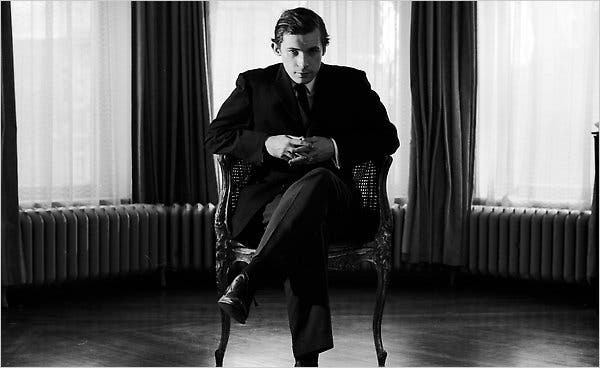
In his essay “Let’s Ban Applause!” from the Glenn Gould Reader, renowned, controversial as well as deceased pianist Glenn Gould haughtily proposes the Gould Plan for the Abolition of Applause and Demonstrations of All Kinds (GPAADAK), claiming that the ideal concert is one without applause. He states–and I imagine, in his calm yet extremely condescending tone–that he is “disposed towards this view because [he believes] that the justification of art is the internal combustion it ignites in the hearts of men and not its shallow, externalized, public manifestations.” According to him,
The purpose of art is not the release of a momentary ejection of adrenaline but is, rather, the gradual, lifelong construction of a state of wonder and serenity.”
For him, the invention of the phonograph and radio is perfect for our evolution towards an ideal listening of music, because it awakens us to the challenge that “each man contemplatively create his own divinity”.
Now, ladies and gentlemen, before we start bludgeoning him with our liberal bats for his air of extreme poshness and superiority, demanding him to get off his high horse, let us first consider the environment in which Gould thrived.
Gould’s career flourished during the mid-20th century, when recording technology was still ripe and full of potential, a mysterious power yet largely untapped by the classical world. Now, of course, recording technology has had such an influence on our perception of listening to music that even our idea of how live performances should go are affected by it. Because of the “perfection” rendered through the splicing technology in recordings, we have grown up to expect perfection in live performances. Nothing is more blasphemous to music than a single wrong note. It is a literal sin. Performers would rather suffer a spider crawling down their backs while performing than hit a D natural instead of a D sharp. Gould obviously would have had no idea of the influence recording technology would have on modern day perceptions of classical music, but saw it as an opportunity to sieve away some of the bullshit he identified from concert hall etiquette during the time, towards a greater, more profound contemplation of music. In fact, this yearning for perfection in classical music, a phenomenon which has proven damaging to the mental health of musicians nowadays, was very much embraced by Gould. In his ideal vision, “art on its loftiest mission is scarcely human at all”; the dawn of the age of recording gave him a glimpse of this utopian future, where the human–and hence imperfect–factor present in music is eliminated. For his progressiveness and desire for a better future for classical music, I applaud him, no pun intended.
However, at some point history repeats itself, and the old progressives soon become the new conservatives.
When we listen to live recordings from the 1930s of, say, Josef Hoffman, we can hear the audience applauding after every movement. In the comments section of those YouTube recordings, I see how people rip into this, saying that it is sinful to applaud in between movements, that they should shut up and respect the artist and the music etc. In fact, I remember smirking smugly to myself whenever I hear an audience member clap in between movements of a piece only to realize they weren’t supposed to; I also remember getting annoyed when a whole body of audience would applaud in between movements due to ignorance of concert etiquette. Without realizing it, I, together with the majority of the modern concert audience, have helped put Gould’s plan into action.
Nevertheless, I recently read in Kenneth Hamilton’s amazing book After the Golden Age: Romantic Pianism and Modern Performance that it was in fact the norm for audiences to applaud in between movements, and that audiences were much more rowdy than simply applauding in between movements, an act we already consider scandalous nowadays. Not only that; the concept of “complete” works was barely accepted in recitals! So rather than playing all three movements of a Beethoven sonata, performers like Liszt or Clara Schumann would often only present single movements, and the audience’s applause were a measure of how well-received the music was! So yes, concert music pretty much operated on a people-pleasing manner. That was probably the reason popular concert pianists such as Liszt often had to perform crowd-pleasing “bangers” like his fantasies and improvisations rather than more serious works like Beethoven’s Pathetique or Moonlight Sonata. Hard to imagine, but Liszt’s recitals would have been the equivalent of a modern-day jazz jam or even pop gig.
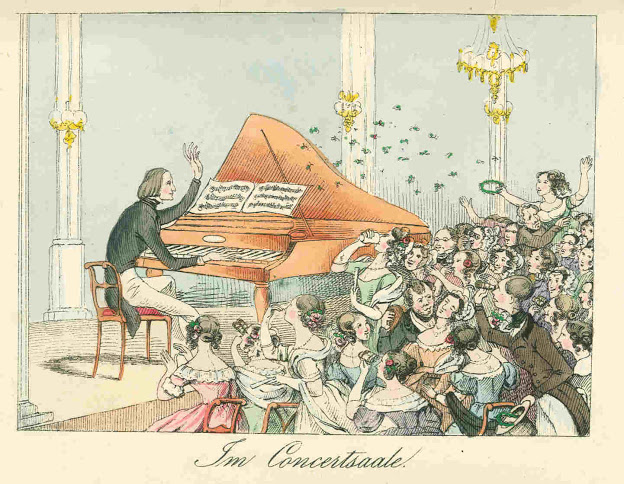
Even though Gould came into the scene long after the greats such as Rubinstein, Rachmaninoff and Liszt, we can imagine the audience pre-recording era was very unlike the modern-day audience who treat the concert hall like a holy shrine, where one can hear a pin drop on the concert stage between the time the performer finishes his bow and his playing the first notes of the piece. If we are to believe that concerts were very much more audience-led back then than nowadays, we can also imagine how merciless they would be toward music which aren’t to their taste (i.e. Schoenberg), and therefore understand why someone like Gould, who adores Schoenberg as much as Bach, would detest such an audience. To him, a progressive and an eccentric proponent of new music, applause must’ve been very counterproductive.
Fast-forward about 70 years, to 2022. Recorded music is now convention rather than captivation. We have adapted our expectations of live performances to fit our understanding of music through recordings. We respect the “work” rather than reject it, clapping politely even if we had just had noise screeched into our ears, and refraining from moving a single muscle even as a whole symphony concludes in a triumphant manner, simply because this is the “first movement”. We have, in many ways, become the ideal listener Gould so envisioned decades earlier, carrying “this quality of introspection…into the concert hall and theatre themselves”.
Or have we?
Gould proposed his Plan as a protest against the public’s rejection of new music, yet we have carried this idea of not applauding to many works which do deserve applause, and most of the time we don’t even know why we don’t applaud! Much concert music was written with an audience in mind, and many whimsical features in music demand a humourous audience (think Haydn), just as Shakespeare’s comedies invite laughter. If we laugh at Shakey P’s clever double entendres, why do we hold ourselves back when in the middle of a Shostakovich concerto a waltz suddenly breaks out? It would probably take years of hammering to break the ice between the audience and the performer in the concert hall. I remember, when I was young and sitting in the stalls watching a recital, thinking how close I seemed to be to the stage, yet how far the pianist seemed at the same time. What if I stood up and simply walked on stage? The whole illusion would instantly shatter, this façade which seemed so palpable one could almost touch it.
But no, to think this is the only way classical music can be listened to is wrong, and in many ways it might even detract from the experience. Moreover, the reality is often far from the expectation. Many a times I hear snores in between the fermatas at Wigmore Hall, and these were from people who would later praise the concert glowingly. Conversely, many a times I have seen musicians going on an inspired journey along an improvised solo in a jazz jam, encouraged by the audience, working into a frenzy of inspiration and ecstasy, reaching new heights they would not have thought possible. Without this interaction between audience and performer, are classical music performers really meant to take on the burden of inspiration all by themselves?
Classical music nowadays does need an injection of reinvigorating energy and youthfulness. It is lamentable to see only white hair and wrinkles at a concert full of Rachmaninov and Liszt, which probably takes more energy to play than comping to an Irving Berlin tune. And most often these audience are already biased towards the young performers, grateful towards them for preserving a tradition that the modern, fast-paced world has turned away from, and not being brutally honest about the liveliness of their performance. And I don’t blame them for it.
But it is this lack of interaction between audience and performer, this gradual distancing which has made many people turn away from classical music. Among other factors. The performer, so enshrouded in myth, the idea of classical music, only for the “divine” who are in a long meditative “state of wonder and serentiy”, has been elevated so high up into the clouds that many people have given up craning their necks and turned instead to rap and jazz.
Examining Gould’s thoughts, it is no wonder that he turned away from a concert career to solely producing recordings, aside from staging radio plays and interviews with himself. I don’t completely disagree with him; I do believe in the superiority of classical music as an art form, but only to the point where it demands respect and admiration, but not to where it tries to shake off everyone who tries to admire it because even that is below its stature. Perhaps the role of recording is in emphasizing the elevated status of classical music, but the concert hall and theatre should remain a place where art is communicated, man to man.
Gould never experienced COVID. He never understood the importance of physical human interaction as we do now. All he wanted was to seek refuge from it. But I believe the tides have turned. It is time to bring back the applause and demonstrations of all kinds.
 Literally Left-handed
Leave a comment