
Perhaps you’ve heard of Clare Hammond, perhaps you have not; this statement applies just as well to the composers she chooses to programme in her recitals and recordings. Unsuk Chin, Sofia Gubaidulina, Hélène de Montgeroult, Andrzej Panufnik…Clare Hammond is a pianist who seeks to bring music at the fringes to the limelight.
Normally she does this alone, and she admitted to me that she enjoys the creative control of working solo. However, in the project “Ghosts and Whispers”, she teams up with English composer John Woolrich and notable filmmakers the Quay Brothers to produce an immersive experience which weaves classical music and the visual arts together. The title of the project hints subtly at the haunting undertones this experience conveys, and it is only right that the Barbican has programmed it on the 30th of October, the eve of All Hallow’s Eve, when the night will be filled with the echoes of departed souls carried by the breeze that blows from the River Styx.
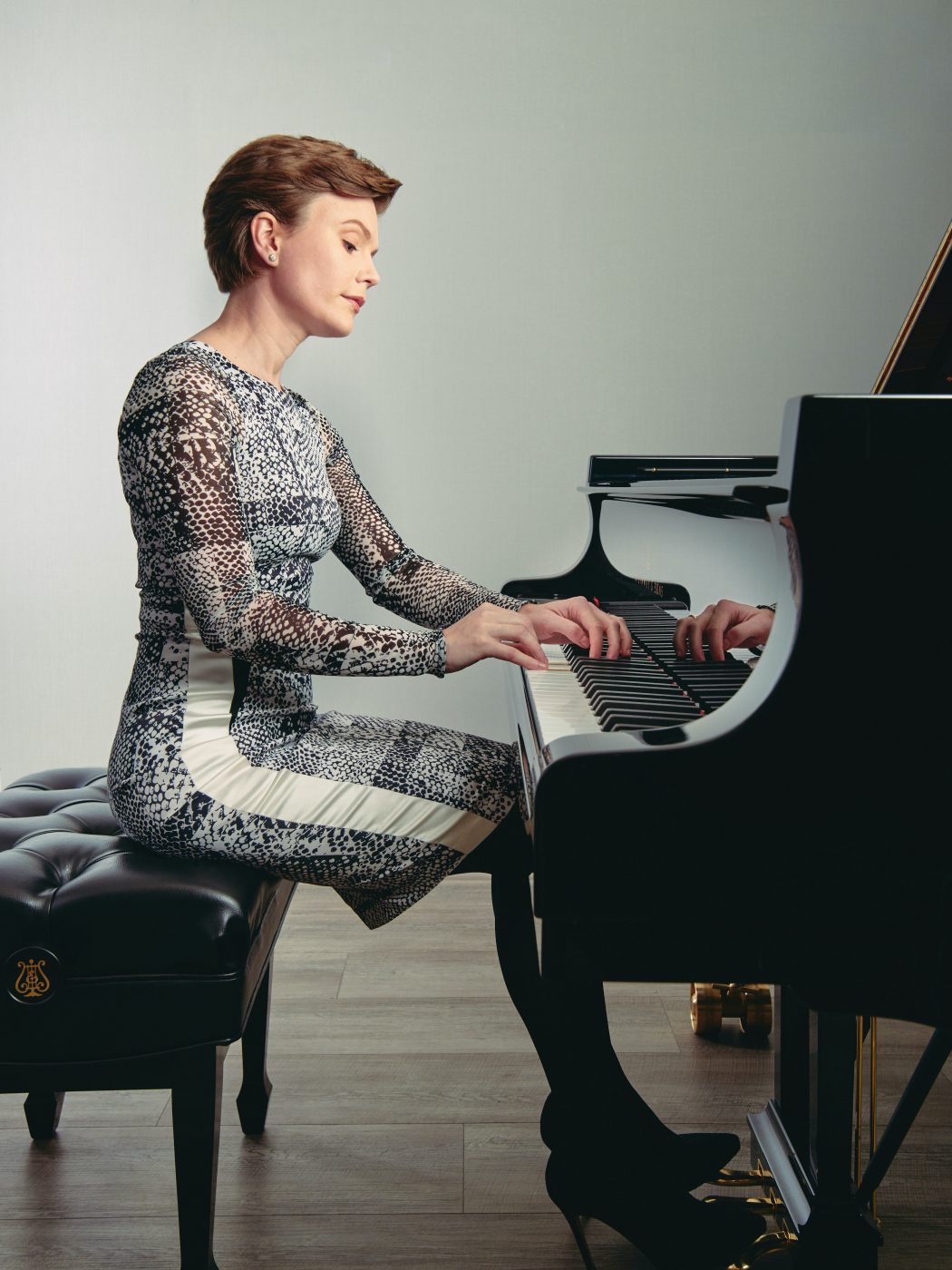
Determined to confront my irrational fears, I decided to seek Clare out to get a better understanding of “Ghosts and Whispers”, its conception and creative process.
Even though “Ghosts and Whispers” is an all-inclusive package–and by that I mean you get the cinematic experience together with the live music–all the elements which it comprises were originally individual works in their own right. The motion pictures from the Quay Brothers are derived from unused footage in previous works; the music includes works by composers like Mozart and Schubert and Janáček, as well as pieces from John Woolrich’s Pianobooks.

Conception
“It was John who came up with the idea of ‘Ghosts and Whispers’,” Clare told me. “He got in touch autumn 2016, saying he had this idea for a programme of fragments. His Pianobooks are full of miniatures, lots of which are fragmentary in nature, and he thought it might be interesting to programme it alongside fragments by other composers.”

The Pianobooks, of which there are enough that one cannot count with one’s fingers, each contain about two dozen miniatures, all of which have programmatic titles like “What is she singing?” or “Procession” or “The night has come”.
“These miniatures are never purely abstract,” Clare reflected, “and it’s only natural that the scope of this project to programme these miniatures did not remain in the realm of only one artistic medium.”
Clare and John then set about sifting through the Pianobooks, choosing different miniatures, while at the same time carefully selecting music from the “greats” to fit into the programme. This was not just some attempt to feed a spoonful of contemporary music in between feasts of well-beloved classics, but a programme carefully considered in order to create a psychological narrative.
Cautious curating is a necessary ingredient.
Curation
“It’s a narrative but not in the sense that there is a story behind it that can be put into words. It’s narrative in a more diffuse sense, an emotional trajectory that can be felt but not described.”
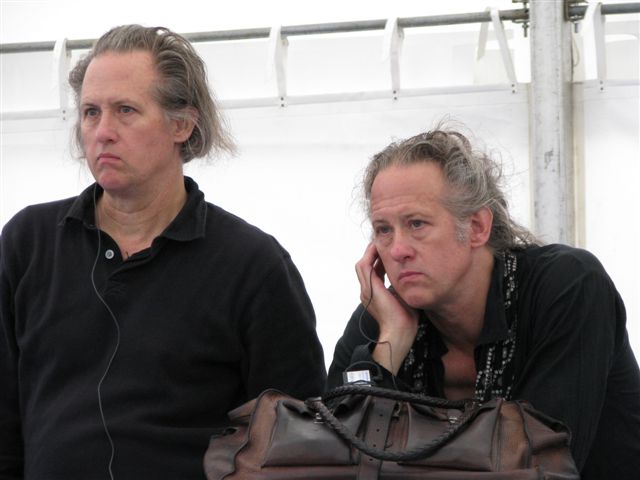
Perhaps it is the emotional narrative that “can be felt but not described” which truly unsettles us, thus adhering to the title of the project, and who better to create this unsettling narrative in the realm of filmography than the Quay Brothers? Their artistic vision is quite sympathetic to that of John, whose music can be quite unsettling and at times even spectral.
The Quay Brothers create a ghoulish universe in their brief stop-motion films using scary-looking puppets and dolls. There are no proper linear storylines that can be divulged from their films, thus adding to the disturbing effect already effected by the scary cousins of Annabelle that roam their cinematic universe.
What’s more: they love classical music. “When we visited the Quay Brothers at their studio in London, they demonstrated a broad knowledge of classical music,” Clare told me. The Quay Brothers have visualized music by Stockhausen, created set designs for operas by Prokofiev and Tchaikovsky, and have even created films about many composers including Leoš Janáček.
“John adores Janáček. There is something really poignant in Janâček’s music which aligns with what John’s miniatures are about.” Even without their love for Janáček, John Woolrich and the Quay Brothers are already a match made in heaven.
Creation
Since everything that made up the project had already been composed or filmed, the creative challenge lay in piecing them together.
“John and I met up in London at his place and we pieced together a programme, reaching far and deep into musical history.”
And piece together a programme they did, witnessing a radical marriage of Mozart and Woolrich, Schubert and Stravinsky which all fit into a bigger picture that cannot be complete without the Quay Brothers’ ghoulish films.
The theme of death runs through the entire programme, a pensive Clare told me. Not in a frightening way; rather, it is a contemplation in the face of death. The Stravinsky fragment from the Symphony for Wind Instruments was written in memory of Claude Debussy, who died 2 years prior to the composition of the work; the Sarabande from Jacquet de la Guerre’s sixth Suite for Harpischord, in all its placidness and simple beauty, was written after all of her family members had died; Schumann’s Rebus, which is a musical puzzle written for his children, contains a more existential message to “leave the fatuous” and “seize the genuine”.
You can see the whole repertoire list for the “Ghosts and Whispers” project here.
“The very idea of fragments in this project also deals with a sense of loss,” Clare continued. Referring to some of the music by Mozart and Schubert, she said: “there are pieces that could’ve been absolute masterpieces and you get a sense of the creative potential in the miniatures, but the very fact that they are incomplete also conveys a sense of loss.”
After piecing the music together, a rough recording was made which was sent off to the Quay Brothers who then worked on the visual side of things.
“It was odd,” Clare admitted, thinking about how it felt upon seeing her work interpreted by other people. If the project was entirely under her control, she probably would have imagined visual images that were more prosaic to have accompanied the music, but what came off definitely brought the music to a different level, heightening the experience by bringing two art forms together.
Indeed, from the trailer I did notice how uncanny it was to have the music with the film together, even more so than the film by itself, which was already pretty scary.
“It’s something that really lingers and probes into your subconscious.”
Combination
However, just because this “Ghosts and Whispers” is a grand programme of fragments does not detract from it the internal sense of continuity envisioned by its creators.
“I think because of the nature of the fragments, which are incomplete and simply drift off, the programme becomes much more amorphous. There isn’t a sense of clear separation between pieces, it feels like a fluid experience.” Hence, even though the programme is made up of individual works, it contributes to the grand vision of John Woolrich, Clare Hammond and the Quay Brothers.
Clare seemed very excited about bringing the show to the Barbican. “They have the capacity to do a proper blackout, and they have a very large screen.” All of these contribute to the immersive experience of “Ghosts and Whispers”.
“The size of the venue doesn’t matter. It’s a subjective experience that’s meant to be different from each audience member and what’s important is to ensure they get the sense that this is personal. In a way it should always be intimate.”
I am very excited to experience it for myself, and can’t wait to see the show at the Barbican.
Get your tickets for “Ghosts and Whispers” at the Barbican on 30 October here.

 Literally Left-handed
Leave a comment