
It was on a particularly cold winter evening, while on a particularly long Tube journey, in a particularly empty carriage, that I plugged in my earphones and put on the Soundcloud recording of KaJeng Wong’s new “God Pray Love” album ahead of its official launch on Monday, 19th December, all the way across the globe in Hong Kong.
Such are the triumphs of the modern age that I am now able to experience music wherever I am, observing not a pianist’s fingers but snow-clad trees beyond the windows whizzing past in a blur. The monotonous landscape of the journey, the passiveness of my mind late at night, and KaJeng’s intensely meditative playing all swirled into one; the music dissolved into the landscape outside and became my thoughts. It took me out of a physical journey and into a metaphysical one. Pinner and Harrow-on-Hill flew by. Then Finchley Road, Baker Street…I was barely conscious of them. I was only conscious of being with the music. Not even listening to it; simply being with the music.

In a way, that’s how I believe KaJeng’s album should be experienced. The programme is carefully tailored to flow seamlessly without break; the idea of it first conceived in 2015, “God Pray Love” was premiered in November 2020 in Hong Kong at the height of the coronavirus lockdown. A programme exploring faith and divine love, it is a project of utmost importance to KaJeng in his creative life, and each piece is carefully chosen. Fitted into the grand scheme of “God Pray Love”, they do not seem to me standalone pieces, but rather stand always in relation either to adjacent pieces, or to the three phases of the programme: “God”, “Pray” and “Love”. Therein lies KaJeng’s special ability: programming music in a way to express his own philosophy.

The journey begins with a call from above: Bach’s famous Prelude in C major, decorated by Gounod’s angelic “Ave Maria” descant. We are witnessing an apparition from on high, and KaJeng’s playing communicates all the desire and yearning awakened in depths of the soul.
Thus “God Pray Love” opens with a desire for pure beauty.
From the divine purity of C major, the music moves into the simple yet joyous G major, the key of Bach’s “Jesu, Joy of Man’s Desiring”, a cantata transcribed for piano by the legendary Myra Hess. KaJeng is clear and consistent in the layering of textures, always keeping the moving triplets in the background while connecting the cantando melodies—separated into different sections in the cantata—with his superb ear. He allows the music to speak for itself, never infusing it with excessive emotional gestures, and in a strange way his objectivity makes the music more moving.
Beginning on the low G major octave on which “Jesu, Joy of Man’s Desiring” ends, thus creating a seamless transition, Liszt’s “In Festo Transfigurationis Nostri Jesu Christi” (On the Feast of the Transfiguration of Our Jesus Christ) acts as a narrative interlude in which we witness the literal ascent of Jesus Christ as the music climbs higher up the register of the keyboard. Starting from the low G (reminiscent of the opening of Liszt’s piano sonata, perhaps?), the piece ends at the top of the keyboard in the key of F sharp major, a religious key in Liszt’s language. With no clear structure, Liszt’s composition achieves great significance in KaJeng’s “God Pray Love”, acting as a transition into a turning point for the programme.
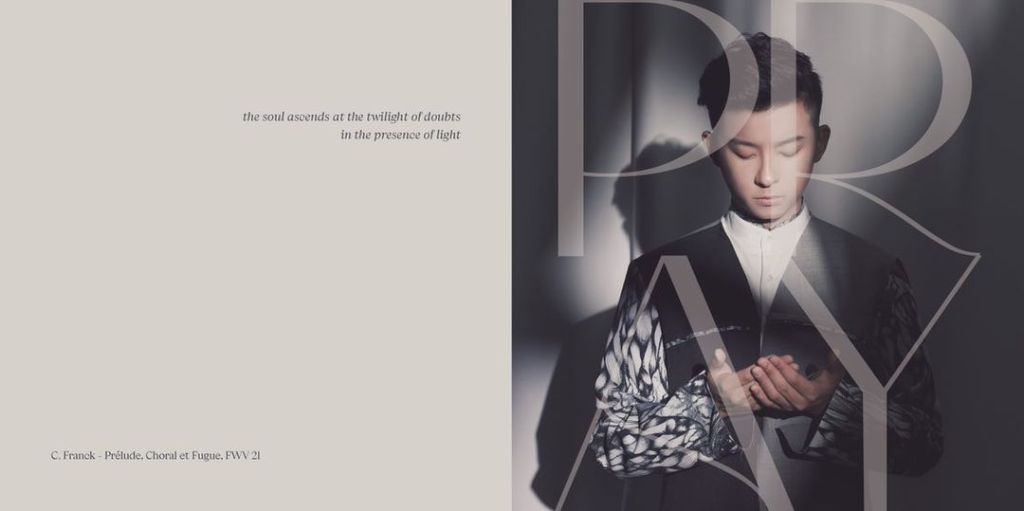
It is at this point that KaJeng taps into his more passionate side, framing Franck’s intensely passionate “Prelude, Chorale and Fugue” with two of Liszt’s pieces from “Harmonies poetiques et religieuses”, which set Alphonse de Lammartine’s poems to music: “Benediction de Dieu dans la solitude” and “Cantique d’amour”. While almost all the pieces in “God Pray Love” have Romantic undertones, these three pieces—placed in the centre of the programme—are the most passionate, and they demonstrate just how earnestly, as an artist, KaJeng wears his emotions on his sleeves.
In Liszt’s “Benediction de Dieu dans la solitude”, the music oscillates between the passionate and the meditative, and KaJeng’s playing reflects just that. His sense of structuring comes into play, with him saving his emotional outburst for the recapitulation of the passionate first section.
The challenges presented by Franck’s colossal “Prelude, Chorale and Fugue” cannot be counted with all the fingers on both hands, but what struck me most wasn’t how effortlessly KaJeng navigated these problems, but how his sense of the music’s structure reinforces his emotional expression. He creates long-lasting build-ups, which culminate in the explosive, triumphant finale, but still one feels there is more he would like to express. After all, isn’t that what desire is all about? And the Franck, which dominates the “Pray” phase of KaJeng’s grand narrative, is a passionate, humanly appeal in KaJeng’s conception.
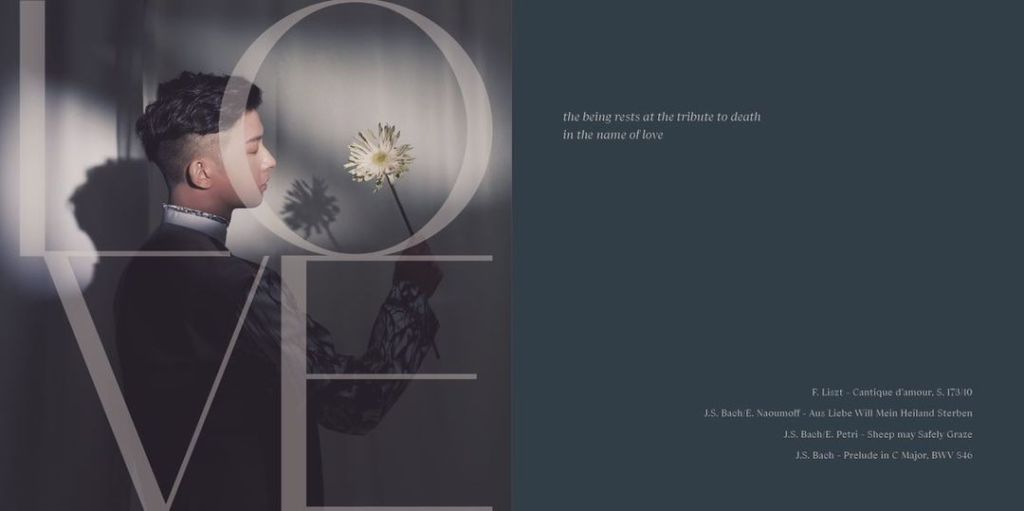
Even though, conceptually, being at the centre of the programme would place Franck at the peak of the emotional journey which KaJeng takes us on, I feel that it is in Liszt’s “Cantique d’amour” that KaJeng reaches the height of his emotions, a passionate outburst of a transcendent love that ends in a resounding E major. Incidentally, this piece, which closes Liszt’s grand cycle of musical poems, is also the point in KaJeng’s programme where the music returns to its more meditative and calm opening.
KaJeng pays homage to his former teacher, Emile Naumoff, with a beautiful rendition of Naumoff’s transcription of Bach’s cantata “Aus Liebe Will Mein Heiland Sterben” (Out of love my Saviour wants to die) from St Matthew’s Passion, a contemplative meditation with a tint of melancholy. KaJeng weaves together multiple voices while maintaining the stillness and space that shows a calmer contemplation of a divine love, away from the passionate, yearning song of “Cantique d’amour”.
The turn towards a different world of pastures green, where love is plenteous and comes with no suffering, is apparent as the music, which stopped in the melancholic A minor, starts again in the joyous B flat major in Egon Petri’s transcription of Bach’s “Sheep May Safely Graze”. The simple beauty of this music is reminiscent of the Hess arrangement of “Jesu, Joy of Man’s Desiring”, which opens this album, gently guiding us in our return back to beginning.

The symmetry is complete when Bach’s C major Prelude returns to conclude the album, this time in its original version. After a journey through admiration, desire, yearning, passion, melancholy and contemplation, going all the way to F sharp major, the furthest in the circle of fifths, the return to the simple key of C major is so much more profound and meaningful, and we see why KaJeng has brought us on such a long journey only to return to the very beginning.
KaJeng’s album “God Pray Love” re-positions the idea of what it means for a classical musician to produce a recording. It is not merely a testament to what a musician can do and how he interprets a piece. KaJeng brings to it a deep and personal idea of what programming should be like, a skilled honed through years of experimenting and performing, and takes his listeners on a journey that is simultaneously personal and universal. It allows us to experience this journey in our own ways, in our own context, whether we be at home having dinner or on a train across London on a cold, wintry night.

 Literally Left-handed
Leave a comment