Programme:
- Cécile Chaminade Automne, Autre Fois, Les Sylvains
- Robert Schumann Fantasie in C, op. 17
- Stephen Hough Sonatina Nostalgica
- Frédéric Chopin Piano Sonata No. 3 in B minor, op. 58
The programme Sir Stephen Hough presented at the Barbican Hall last night was almost exclusively Romantic; even his own composition, Sonatina Nostalgica–commissioned by his alma mater Chetham’s School of Music and written for British pianist Philip Fowke–was, as he told his audience, steeped in the language of English Romanticism. Nevertheless, it was a mixed variety of Romanticism, from undiscovered salon gems by Cécile Chaminade to Romantic favourites by Schumann and Chopin.
I always imagine it must be so daunting for pianists to perform a solo recital in a hall normally reserved for orchestral performances, yet the three salon pieces by Chaminade which opened the concert–Automne, Autre Fois and Les Sylvains–were performed by Hough with enviable lightness and freedom, taking us straight out of the cavernous concert hall and into the intimate atmosphere of the salon or drawing room, a space where spontaneity and flights of fancy are favoured over artisanal attention to detail. Yet Hough still charges these fairly regular pieces (standard ABA form) with unpredictable drama in the stormy middle sections, in between the more charming outer sections, which he not only played with taste but also with flirtatiousness (yes, I didn’t know that was possible in piano playing too!) and occasional tongue in cheek.
I wasn’t the biggest fan of the piano of Hough’s choice yesterday evening, a Yamaha whose sound seemed too bright and lacking in subtlety. It was great for creating dramatic contrasts in volume, and Hough used that to his advantage, but too often the loud sections simply became a mush of sound, not particularly distinguishable or enjoyable to listen to. Nevertheless, on it Hough also created some of the silkiest and smoothest and clearest pianissimo runs which were really to die for, a reminder that technical brilliance possesses its own aesthetic merits.
While I was charmed by the Chaminade pieces, and I must admit Hough really has a knack for being dramatic and pushing the audience to the edge of their seats (the breakneck speed of the finale in the second movement of Schumann’s Fantasie and the finale of the Chopin really had me worried), I wasn’t particularly convinced by his interpretations of the two large-scale pieces in the programme, Schumann’s Fantasie in C and Chopin’s Piano Sonata No. 3 in B minor, both towering pillars of the Romantic repertoire. Both pieces, which contain exquisite beauty and moments of deep introspection, seemed rather light and “easy” under Hough’s fingers, and as a result, while his incomparable brilliance and tendency to be swept away by the drama of it all created a breathtaking performance, at times the interpretation suffered from a lack of depth and exploration of colour.
For the encore he performed a movement from Schumann’s Fantasiestücke, op. 12 and, to the audience’s delight, his own wildly virtuosic variations on a theme from Mary Poppins. Funnily enough, that encore (plus the Chaminade pieces) revealed to me more of his extroverted and flamboyant personality, a performer who delights in delighting his audience, than the Schumann and Chopin. For me, that encore was definitely the highlight of the evening.
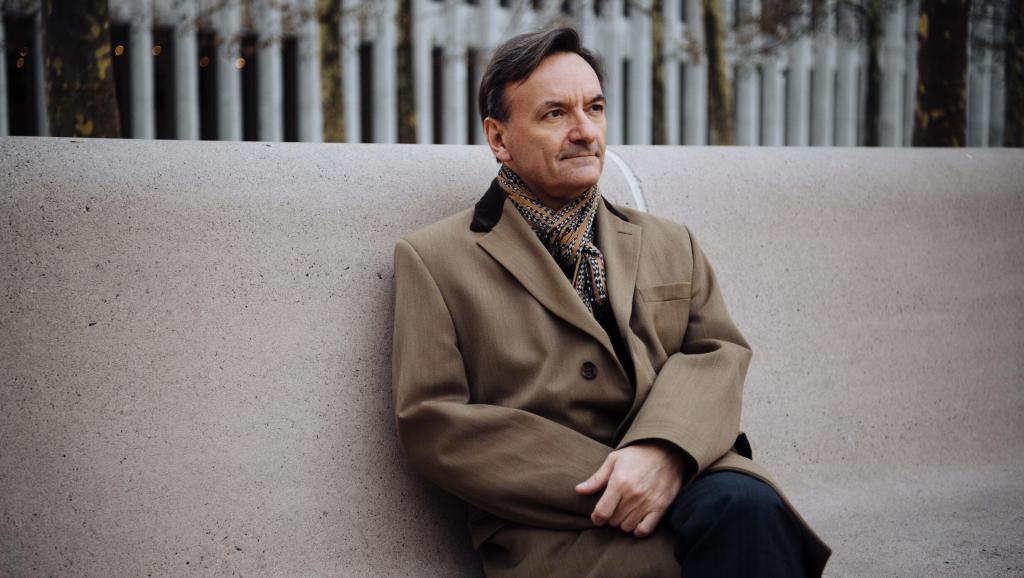
Article featured photo courtesy of the Barbican, copyright Jiaying Chen.
 Literally Left-handed
Leave a comment