
“Poor Things” is an incredible conception, a glimpse into the creative and playful genius of Alasdair Gray.
The novel, published in 1992, got the world’s attention when Yorgos Lanthimos’ 2023 film adaptation was nominated for Best Film at the 2024 Oscars and Emma Stone won Best Actress starring as Bella Baxter that year. I’m not one for reading the books AFTER watching the movie, but my friend was raving about it, so I decided to give it a go.
Having seen the film, I thought I knew what the novel (if you could even call it that) was about. And for about two-thirds of the book, it reads fairly similarly to the movie. It is epistolary in nature, and right from the beginning the book is framed as “Episodes from the Early Life of Archibald McCandless M.D., Scottish Public Health Officer”. Within the pages of “Episodes” are letters, some from Bella Baxter and some from Duncan Wedderburn. The letters written from both describe the same series of events, but are wildly different. We are meant to sympathise with Bella and see Duncan as this crazy person whose Byronic attitude to life backfires and eats him alive and ultimately lands him in a mental institution. The writing adopts—with a slight hint of irony—a nineteenth-century polite style of writing in a scientific tone, from a fictional writer who is supposed to be a great scientist, but it is sentimental in portraying Bella, the innocent female who is revived by the benevolent scientist genius-freak Godwin Baxter, embarks on a sexual coming-of-age journey before returning to her true love, the narrator, after enduring trial and tribulation. At times we have to suspend our disbelief when the narrator describes the Frankensteinian manner of Bella’s “birth” and Godwin Baxter as basically a monster, but the surreal nature of the film probably also contributed to my assumption that this was part-science fiction with a healthy amount of imagination infused into it.

As we read Archibald McCandless’ account, we are meant to marvel at the breadth of knowledge of Freudian psychoanalysis, the way the novel sets up the improbable “experiment” of putting a child’s mind in a grown woman’s body and examining how it affects the way she views the world; basically a scientific Bildungsroman (I suppose the genre sets it up to be sentimental already).
That in itself was already interesting enough, the nature of its content and experimental premise exposing the hypocrisy of 19th-century imperial Britain and ridiculing the way society functions.
But right at the end of McCandless’ account (and this is where the movie also finishes covering) the novel goes one step further and completely overturns my expectations.
If you have seen the film but don’t want to know how a change in the structure of the novel completely changes the core of its philosophy, I suggest you STOP READING HERE.
What follows McCandless’ “Episodes” is a letter written by Victoria McCandless (a.k.a Bella Baxter, after her “happy” marriage to Archibald) addressed to posterity, an appendage to the main narrative basically stating that everything her late husband wrote—and you just read—is essentially untrue. Although we know it is fiction, what she says in the letter completely overhauls our understanding of the story. What lies dormant in the main narrative, stuff to be swept under the rug (Wedderburn’s letter dismissed as a madman’s ravings; General Blessington as masochist trying to kidnap his wife) suddenly surge to the surface as competing versions of the truth as Victoria revealed that she never attempted suicide, that she actually loved Godwin Baxter and only married Archibald out of convenience, that she did in fact manipulate Wedderburn and discarded him when he was no longer of use to her.

In her letter, she showed herself to be a practical woman with very socialist views who disdained her husband’s turning away from manual labour to writing stories as they became more economically stable.
With the inclusion of Victoria’s letter, the story’s central meaning is suddenly called into question. What are we to make of this? Whose version is correct? It makes a difference because we can draw very different moral conclusions from it. I found that particularly so since the narrative did have a moral and sentimental trajectory, i.e the innocent heroine coming to her own in her own terms while finding true love along the way. That idea was shattered with Victoria’s letter and it was only then that I realised conventional narrative structures (the Bildungsroman, traditional 19th-century novel structures) do have moral meanings attached to them.
But that wasn’t all.
Alasdair Gray’s postmodern questioning of narrative structures extended to encompass the whole book, which I only realised after reading it. The title page states it to be “Episodes from the Early Life etc.”, written by a real Archibald McCandless, discovered by a Michael Donnelly (who does in fact exist in real life!) and only edited by Alasdair Gray. He is even given a biography, and the Frankenstein experiment mentioned in the—dare I say it?—novel is stated as a true event that happened in Glasgow in 1881 on the very outset.
Alasdair Gray, posing as an editor, then supplies an Introduction to the “novel”, stating he has to include Victoria’s letter to fulfill his obligations as an “objective historian”, but opines that Victoria is the lunatic.

In the extensive notes, Gray appends an unusually long biography of Victoria McCandless and her career as a socialist doctor after her husband’s death. However, it also shows that she carries her socialist ideas to extremes, advocating for a “loving economy” in which parental love is believed to be the cure for wars and that exposing children to sex can prevent Freudian problems when they grow up, showing her to be a lunatic whose ideas go just a touch too far.
Depending on which version of the “truth” you believe in, you can draw wildly different conclusions from the narrative. If you believe in McCandless’ narrative, you see a very weird, surreal and scientific version of true love. If you believe in Victoria’s version, you see that narratives are simply constructs made up by men of the wealthy, privileged class who has the time to create illusions to justify all their exploitation of the lower working classes.
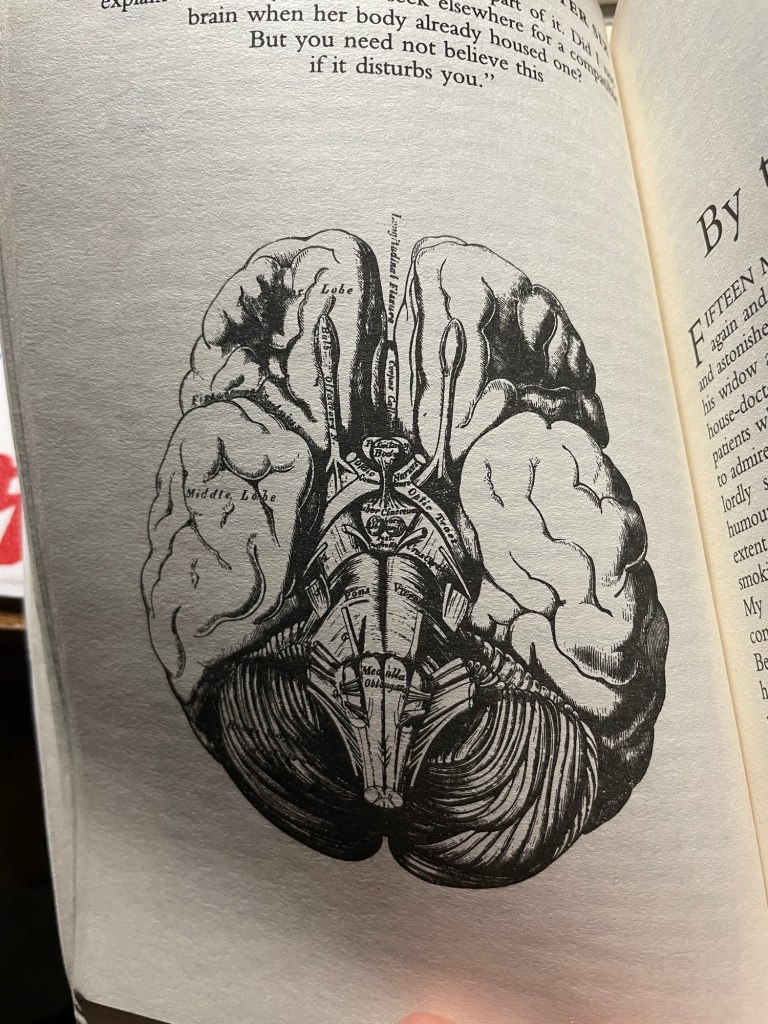
If you believe in Gray, well, you simply won’t know what to believe in because the line between fiction and reality will be so blurred you’ll have to question everything.
And that, I think, is what I really took away after reading the book. Alasdair Gray’s creative play with structure conveniently sets you up with expectations, and by disrupting the structure, exposes by his postmodern sleight of hand that it is all simply an illusion, just like the way established structures and ways of thought taken for granted in the great British empire are disrupted by the anomalous character of Bella Baxter in Archibald McCandless’ narrative.
There is no central meaning to the book; it is in its lack of meaning, inherent elusiveness that continues to draw readers like me to find a meaning in it.
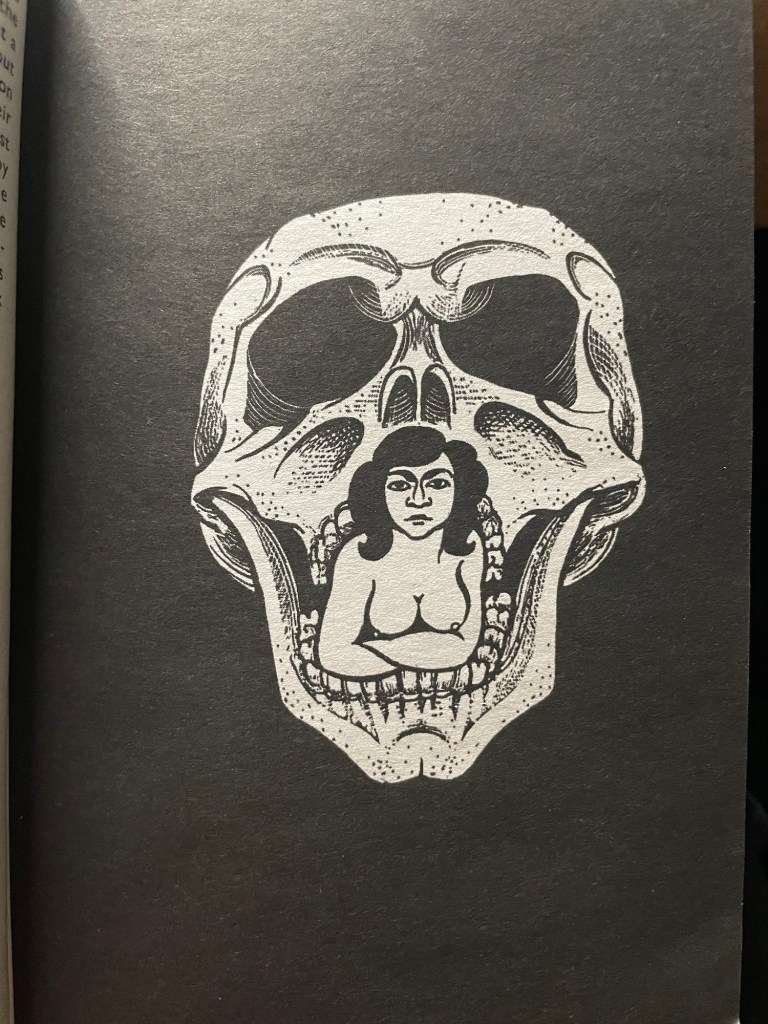
Given Gray’s on socialist politics I have no doubt disrupting narrative has a political aspect to it, but he does so with such a clever tongue-in-cheek way you simply cannot resist saying “bravo”.
Even as I write this post I can imagine Gray watching me as I fact check with Wikipedia and all I can find on the internet, with a twinkle in his eye.

Article featured photo credits to Louder than War.
 Literally Left-handed
Leave a comment