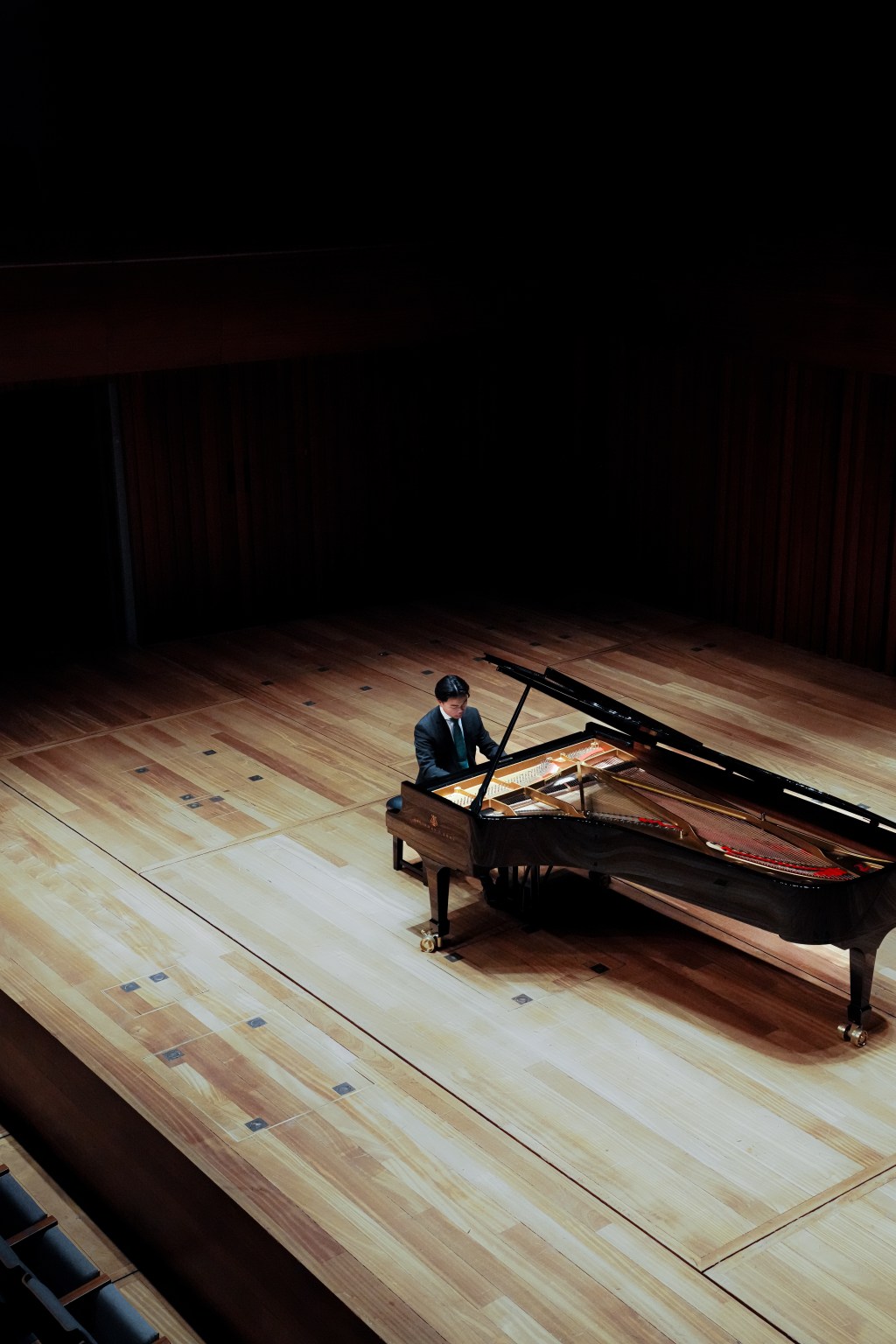
For my Artist Diploma graduation recital, the summation of five years of intensive study at the Guildhall School, I have chosen a programme which presents passion in many different aspects.
Programme:
Sofia Gubaidulina (1931-2025) Chaconne
César Franck (1822-1890) Prelude, Chorale and Fugue
Manuel De Falla (1876-1946) Fantasia Baetica
Interval
Johannes Brahms (1833-1897) Piano Sonata No. 3 in F minor, op. 5
There can be no stronger opening for a recital than Gubaidulina’s Chaconne (1962)–written when she was a student at the Moscow Conservatoire–which literally opens with two thunderous B minor chords on either end of the keyboard. Gubaidulina employs serialism techniques to vary the 23-note tone row which constitutes the ground bass of the chaconne. It is therefore much less noticeable than the ground bass of the “other” famous chaconne by Bach, which feels much more the unifying factor of the music. However, her modernist take on the Baroque form gives Gubaidulina much more freedom and flexibility with the material. The melodic contours of the theme give way to rhythmic shadows, giving rise to new melodic material and even a chromatic fugato section which reminds me of Liszt’s Sonata (also in B minor!). The dissonances and angularity in the music reminiscent of works by her other Soviet compatriots Prokofiev and Shostakovich expresses an aggressive bitterness and violence which continues to resonate long after the grotesque clanging of bells at the end has subsided.
With the dark and bitter quality of B minor still ringing in our ears, we hear the enigmatic five-note motif symbolic of the cross which opens Franck’s Prelude, Chorale and Fugue (1885). Albeit in the same key as the Gubaidulina Chaconne, the Franck immediately opens onto a completely different sound world: that of the gloomy, imposing cathedral, a place where Franck spent most of his life as a church organist. In contrast to Gubaidulina, who takes a restrictive Baroque form (the “chaconne” is literally characterized by its repeating bass line), Franck reaches back into antiquity for the expressive powers of Baroque forms. There is a certain quality of objectiveness and impersonality in these forms that, when combined with symbolism and deep understanding of the power it has on the human psyche, can create transcendental power. In the finale, when all elements from the three sections are fused together and alchemized into something almost omnipotent, and we hear the bells ringing gloriously in B major, we are not witnessing the triumph of a hero; we are witnessing the triumph of our own spirits.
De Falla’s Fantasia Baetica (1919) (“Andalusian Fantasy” in English) has a very conventional ABA structure, yet immediately strikes the listener with its unconventional use of the keyboard to produce sounds more akin to that of a guitar. Born in Cádiz in the region of Andalusia, De Falla reaches back to his roots in this piece, seeking inspiration in the Andalusian art form of “flamenco”.
I remember being baffled by this piece when I first began studying it. It seemed to me just a jumble of runs and arpeggios without much variation in melodic material.
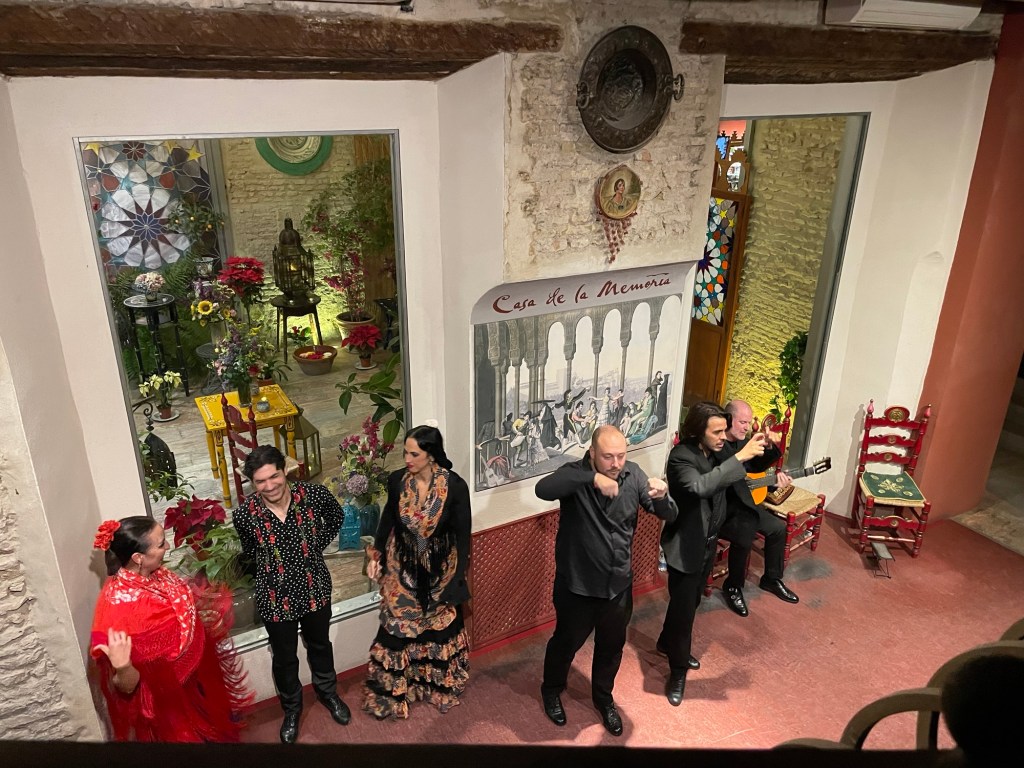
A trip to Seville, a city in the heart of southern Spain and home to “flamenco”, changed all that. Watching flamenco performers sing and dance with passionate abandon, I realized that, being rooted in dance of a dark, raw and almost cathartic nature, rhythm was the very heart and soul of “flamenco”. Learning the art of flamenco is learning the subtleties of rhythm. The untrained ear would find it difficult to distinguish the different kinds of rhythms, yet even listeners unfamiliar with flamenco would feel how the intensity changes depending on the rhythm. Fortunately for me, the Fantasia Baetica does not involve complex rhythmic manipulations; yet the raw and fiery passion of it ultimately lies in the way different rhythms vary the same melodic material. Amidst the intense dances there are also moments of flamenco singing, improvisatory vocal lines influenced by Arabic musical traditions, as well as an evocative intermezzo.
Often in musical history we see composers come into their own later in their composing career, or in their maturity shed all of their former skin to adopt a different musical persona. In the case of youthful Brahms, we are fortunate to see a fully-fledged composer in a musical work that also carries with it the youthfulness and ambition of a twenty-year-old lad. Such is the case with Brahms’ Piano Sonata No. 3 in F minor, op. 5 (1853).
Posterity categorizes Brahms as a stoic, conservative composer of the Romantic period, and to a certain degree that is true; his insistence on form over fantasy, on craftsmanship over spontaneous emotion puts him squarely at odds with the likes of Liszt and Wagner. In fact, when one realizes that Liszt’s Piano Sonata was written the same year as Brahms’ Third Piano Sonata, one can marvel at the divergent paths the two composers of the same epoch had taken; Liszt was already using the outmoded genre of sonata to look into the future, while Brahms insisted on the classical style of having five separate movements in his.
And yet, the Third Piano Sonata–and Brahms’ last one too–is bursting at the seams with passion. Notwithstanding its monumental five-movement structure, the first movement requires the pianist to stretch to both ends of the keyboard, maximising the sonic capabilities of the instrument, as if Brahms wanted to continue where Beethoven left off with the “Hammerklavier” Sonata. In fact, the shadow of Beethoven haunts the sonata, as the fate motif (da-da-da-dum) mysteriously creeps into the first, third and fourth movements, with its resonance most felt in the fourth movement (which Brahms also enigmatically subtitles “Rückblick”, or “Remembrance”). It is a well-known fact that Beethoven’s shadow intimidated Brahms for most of his life, but nowhere is this fear more literally manifest than in this sonata. What Brahms perhaps didn’t realize was that this shadow actually helped define him as a composer and most probably assisted him in his ascension towards greatness.
Young Brahms, swept up by the wave of German Romanticism that was taking Europe by storm, wasn’t as opposed to the heady ideas of love, fantasy and idealism as he would be later in life. References and quotes abound in his early music, just as the music of his mentor Robert Schumann were filled with musical cryptograms. In the second movement of this Sonata, which contains a climax that is arguably the emotional crux of the whole Sonata, Brahms quotes lines from a poem by Sternau about two lovers under the moonlight. In the final movement, Brahms inserts the musical cryptogram which was a German Romantic phrase that his friend Joseph Joachim adopted as personal motto: “frei aber einsam“, “free but lonely”.
Angsty? Very much so. But when under the guise of youthful idealism and combined with great compositional craftsmanship, it becomes passion of the highest order.
Long live youth! Long live passion!
Side note: I am not well-versed in the techniques of serialism enough to know that Gubaidulina’s Chaconne is based on a 23-note tone row. I owe my understanding to Ateş Orga’s 1998 programme notes for Hyperion found here: https://www.hyperion-records.co.uk/dw.asp?dc=W8925_GBAJY9378210
Side side note: my knowledge of “flamenco” does not even come close to that of an amateur. Should my programme notes on De Falla’s Fantasia Baetica cause offense to flamenco aficionados, I do humbly apologize.
 Literally Left-handed
Leave a comment