
I recently finished reading Margaret Atwood’s novel “Cat’s Eye”, published in 1988.
Honestly, this novel is one of the most profound and inspiring book I’ve read. Written as a sort of autobiography of the main character, which in a lot of aspects reflect Margaret Atwood herself, the novel follows the life of Elaine Risley from girlhood to womanhood. What strikes me is the slightly objective perspective the narrator takes in depicting her life. She puts everything in the present tense, as if they are happening in the moment, which sometimes leaves the reader confused. However, this makes the events she describes all the more lively as if she is living the moment, and not recounting a story. Just because she is describing her life more objectively doesn’t mean it lacks detail and emotion. In fact, she seems to describe it like a painter (Elaine doesn’t like calling herself an artist) would depict the world in a painting. It is altogether more colourful because she is able to describe details that a child would otherwise not be able to describe in her childhood. Following her life journey from beginning up to the opening of her retrospective painting gallery, we can reflect on the way time passes and sigh with her as she opines that no matter how hard we try, we cannot recollect any moment perfectly, even if we are great painters.
I especially like Atwood’s description of Elaine’s girlhood. So much truth rings in it. She says that girls are not what adults see them to be–they are not cute. In fact, much of Elaine’s life is affected by her so-called “best friend” Cordelia. “Cordelia has a tendency to exist.” In a way Cordelia can be seen as a bully, but at the same time she is her best friend. For the passive Elaine, there is no escape from her. This idea fascinates me. As they grow up, we see how much time plays a role in the miscommunication between people. As time passes, so many things unsaid or unexpressed just fade into the background until they can no longer be brought up again. There is no forgiveness, because what can one do when there is nothing to forgive? As Elaine relates, she is the central of her own story, but at the same time only a side-character in Cordelia’s. We can never know how much we mean to others. The tragedy lies in Elaine’s inability to find Cordelia in the very end, but I do think it’s a suitable ending because I don’t think any form of reconciliation between Elaine and Cordelia in the end would resolve Elaine’s feelings. What would it do, answer Elaine’s question to life? We can only dwell on the would-bes, because some things can not be simply resolved. In the end, what Elaine’s life culminates to is her artwork. She may be cynical, but truth rings in what she says.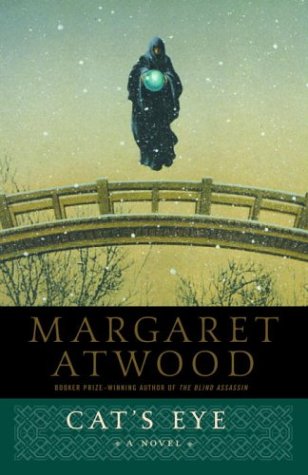
 Literally Left-handed
Leave a reply to chanjeremy420 Cancel reply