Terribly sorry for the long due post to conclude my small project of following the Leeds, but I’ve been very busy since the finale of this grand competition, and now I’ve finally got some time to write about it!
Firstly, a long due congratulations to the prize winners: Eric Lu, Mario Häring and Xinyuan Wang, getting first, second and third prize respectively. Well-deserved and fairly given out, in my opinion. To be very honest, when Eric finally stepped on stage (him being the last competitor) and played Beethoven’s Fourth Concerto, everyone knew he was going to win. The amount of applause he received at the end was indicative enough, and I think the 20-year-old has really stunned the world with his musicianship. Bravo, Eric!
Now, to conclude my journey with the Leeds, I would like to present to you my favourite moments (or performances) in the competition. Since I didn’t have time to watch ALL the performances, this list is only based on the ones that I have heard, and you will notice that I am listing individual performances, and not whole concert programmes. I understand that a performer’s mentality can greatly fluctuate during a performance (as we have seen in Aljoša’s semifinal performance) or that some pieces in the same programme are just less suited to the performer than others, which is what normally happens in competitions where you are encouraged to show your diversity, and so I would like to restore justice to some individual performances that really shone and inspired.
You’ll notice that I didn’t include any chamber performances, nor concerto performances in my list. That’s because I actually found them less impressive than the solo performances–at least not impressive enough to make it to the top ten! I’ve also recalled candidates who didn’t make it into the semi finals, but whom I thought were really inspiring in their performances too. RIP.
When I listen to a performance, I decide whether it’s good by how engaging it is. If my mind starts wandering, I know that the performer hasn’t got my attention, and it is seldom my fault that I’m not focused on the performance. But what really makes a performance special is when it inspires you to listen to the piece again afterwards, and even try to learn it. In this competition I’ve experienced moments like this, and so here’s a list of those top ten:
10. Xinyuan Wang playing Bartok’s Piano Sonata, sz. 80
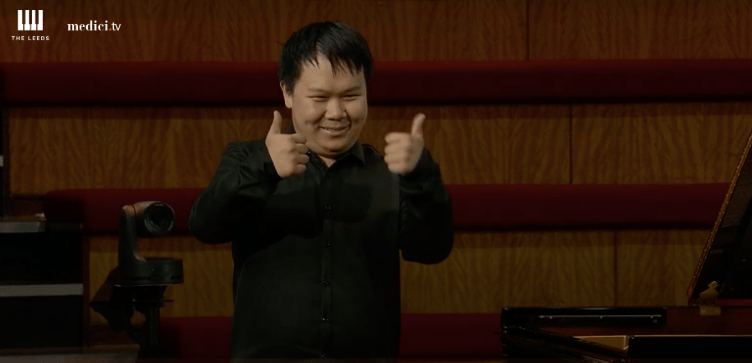
Now I must be frank. I am not a big fan of Xinyuan Wang’s playing. I think he goes over the top with expression sometimes, and makes quite a lot of mistakes. However, his performance of Bartok’s sonata in the second round really stood out, and in my opinion, redeemed him from the slightly dull performance of Schumann’s Humoreske before that. His rhythmic power was really engaging, and he was fearless in playing at breakneck speed. One thing I also really like about his playing is that he looks for hidden voices in the music and attempts to bring them out, giving me fresh perspectives on the music, and it worked well here in the Bartok. And how can one forget his cute bows!
https://leedspiano2018.medici.tv/replay/second-round-with-xinyuan-wang/
9. Evelyne Berezovsky playing Scriabin’s Fantasie in B Minor, op. 28
This was back when I first heard Scriabin’s wonderful fantasy. I’ve fallen in love with it ever since, and I have Evelyne to thank. Her performance of this Scriabin work in the first round–in fact, her whole first round performance–was one of great virtuosity and power. It’s one of those pieces that really suited Evelyne’s style, I think. She may not show much in terms of facial expression, but her passion is definitely conveyed through her playing.

https://leedspiano2018.medici.tv/replay/first-round-with-evelyne-berezovsky/
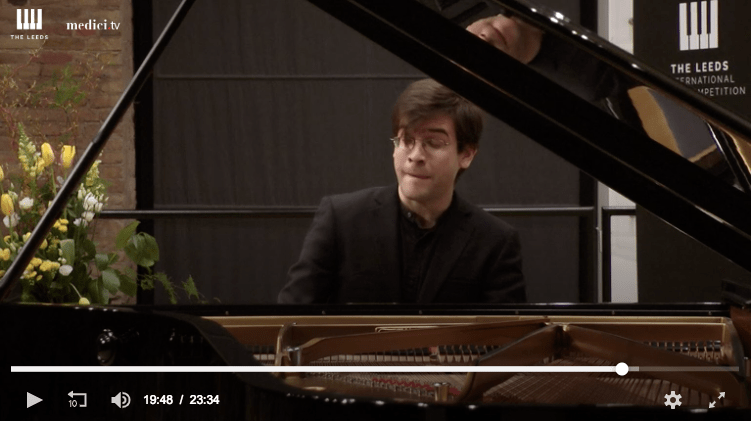
8. Jean-Sélim Abdelmoula playing Beethoven’s Piano Sonata No. 31 in A-flat Major, op. 110
It’s been a while since I heard the name, since Jean-Sélim was unfortunately not chosen as one of the semifinalists, which I thought was a shame, since he was such a good pianist. His performance of Beethoven’s penultimate piano sonata really captured me for some reason. He was so attentive to his playing, and it was so clear and articulate you just couldn’t help being drawn in. I especially loved the fugue at the end of the sonata. Even though it’s been a while since I’ve heard this performance, it really stuck to my mind.
https://leedspiano2018.medici.tv/replay/first-round-with-jean-s%C3%A9lim-abdelmoula/
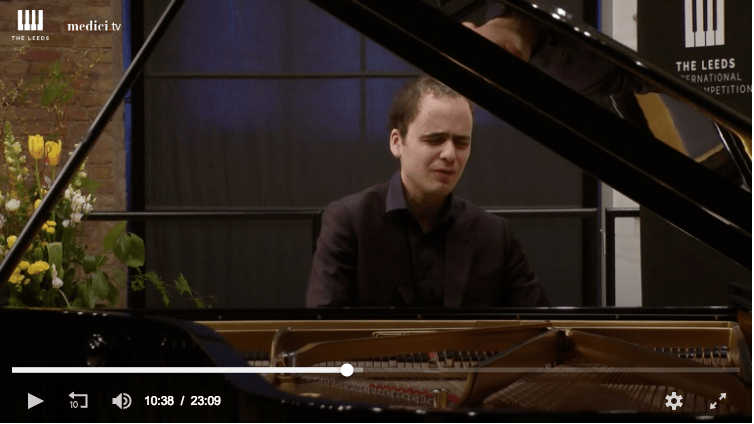
7. Florian Caroubi playing Debussy’s Images, Book II, L. 111
Sometimes I think the French are the best interpreters of their own music.
I was very surprised when I heard that Florian didn’t get the semifinals of the Leeds. He was one of my favourite pianists in the First Round! His playing of Images by Debussy–his national pride–was so sensitive and conjured such a beautiful picture I had to listen to it again. Sometimes I think the French are the best interpreters of their own music. I really want to learn that piece now, which is what I mean when I say that great performances make you want to learn the pieces yourself! Well done to Florian: he really left quite an impression on me in his first round performance.
https://leedspiano2018.medici.tv/replay/first-round-with-florian-caroubi-/
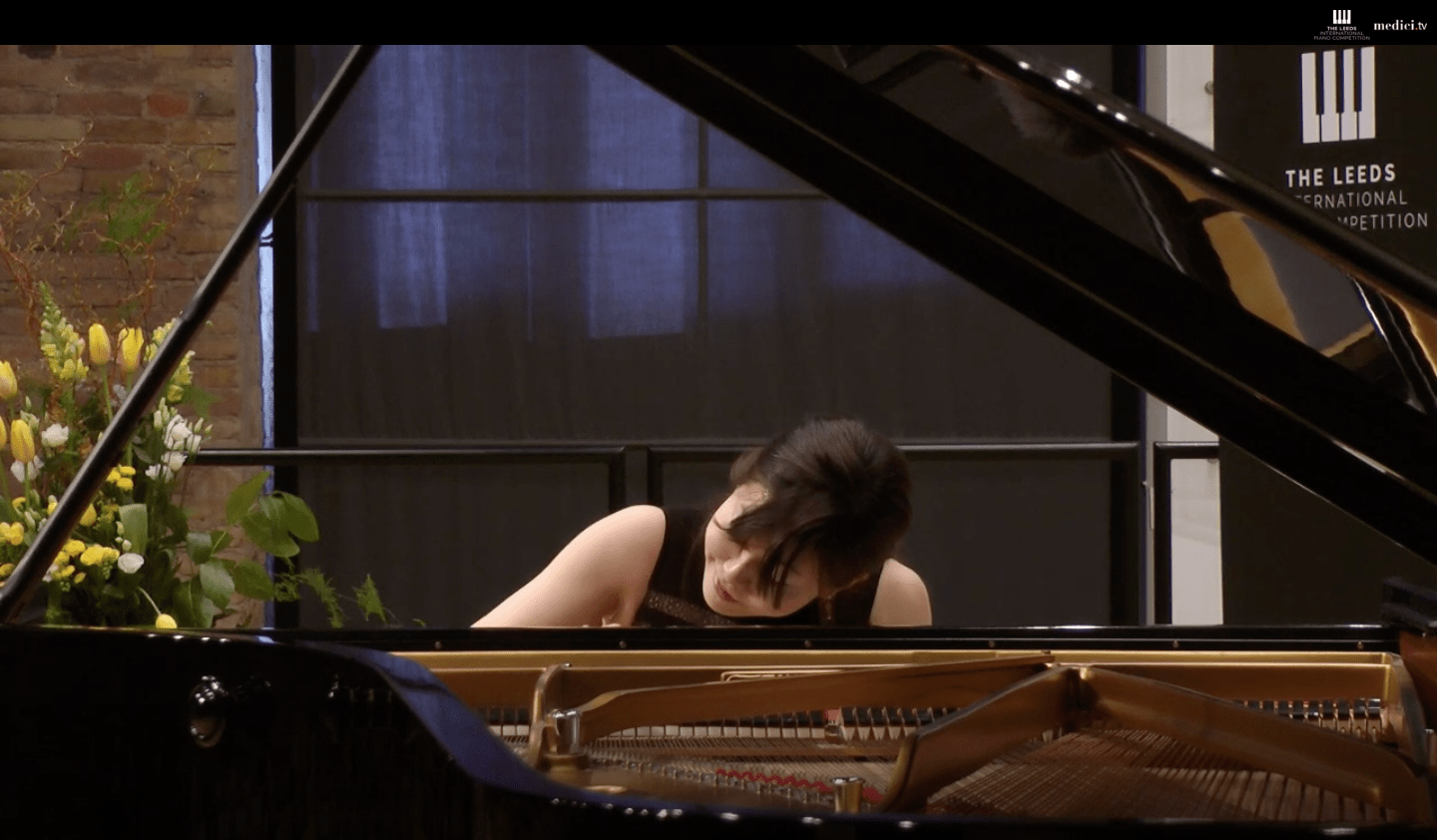
6. Fuko Ishii playing Brahms’ 4 Klavierstücke, op. 119
I absolutely loved Fuko Ishii’s first round performance, especially her final choice, Brahms’ 4 Piano Pieces that he wrote near the end of his life. Fuko played them with such depth and contemplation it was difficult not to be moved by her performance. She took the first Intermezzo slower than normal, but its melancholic tone really hit me, and she played the final Rhapsody with such great power and intensity my heart pounded alongside it in excitement. She really took me on a rollercoaster with her performance.
https://leedspiano2018.medici.tv/replay/first-round-with-fuko-ishii/
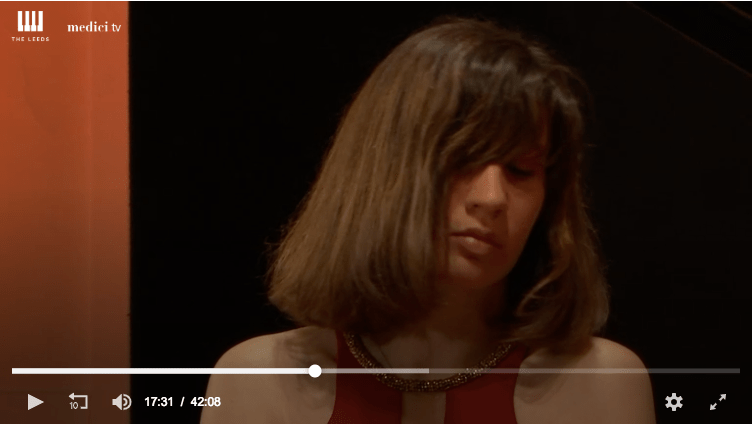
5. Evelyne Berezovsky playing Messiaen’s Vingt Regards sur l’Enfant-Jésus: Le baiser de l’Enfant-Jésus
Yes, Evelyne made it on to the list again! Evelyne is one of those pianists who, when she is really in her element or the music really suits her, can deliver an astounding performance. Unfortunately, the downside is that her style doesn’t suit all the pieces she plays. For example, I find her performance of Chopin’s Fantasie or Rachmaninoff’s Second Sonata a bit incoherent and spontaneous. However, her performance of the 15th piece in Messiaen’s gigantic Vingt Regards sur l’Enfant-Jésus, which she played in the second round, was quite something else. It was the first time I’ve heard the piece, and knowing Messiaen, I was ready for some weird, atonal chords that I’d probably have to listen hundreds of times before getting familiar with it. So I was rather taken aback when I fell in love with the piece straight away, and aspired to learn it. Evelyne’s rendition painted such a starry scene, such a tender picture I almost fell in love with her. To be fair, I do have a slight crush on her, what with her pretty hair, pretty face and unique style of playing. I’ll just confess it right here, and we shall never speak of it again.
https://leedspiano2018.medici.tv/replay/second-round-with-evelyne-berezovsky/
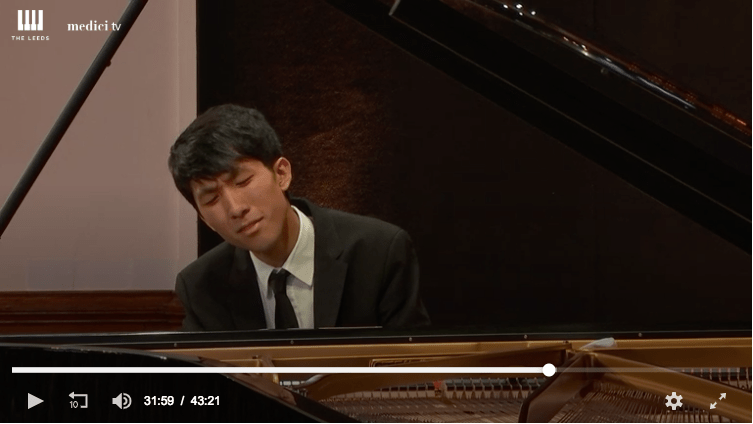
4. Eric Lu playing Chopin’s Ballade No. 4, op. 52
I think by now it is quite unanimous that Eric is the champion of Chopin in this year’s Leeds Competition. In general, his playing is amazing and flawless, but when it comes to Chopin, he really brings you to a different realm. Chopin’s 4th ballade is one of my favourite works by the composer, and Eric just played it so beautifully in the second round I don’t really know what else to say. Nevertheless, the ballade being so famous for its beauty, I HAVE heard other even better versions of it. However, Eric, being only 20 himself, played it with maturity that finds no equal in his years.
https://leedspiano2018.medici.tv/replay/second-round-with-eric-lu/
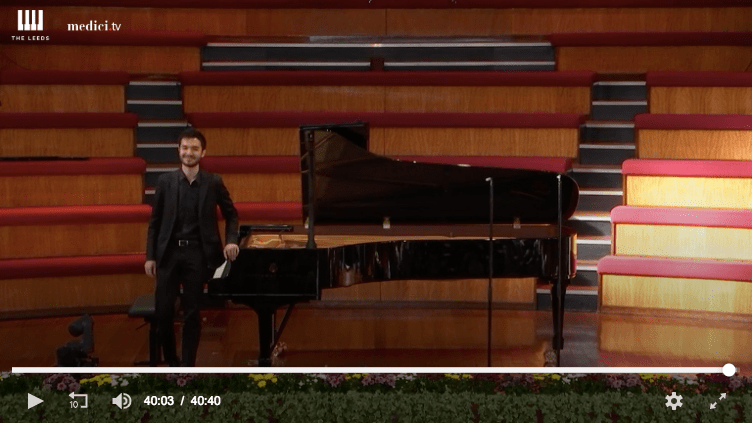
3. Mario Häring playing Mozart’s Piano Sonata No. 12 in F Major, k. 332
In third place, we have Mario Häring playing an iconic sonata by Mozart in the –the one in F major! Let me just say, Mario is a quietly brilliant pianist. He didn’t choose anything ridiculously difficult to play, but his performances all shine with a unique brilliance. His Mozart simply sparkled! What really struck me about this performance was how much he was able to catch my attention with a Mozart–a Mozart! I’m not a great fan of Mozart, but his performance of this sonata made me a fan. He didn’t make Mozart look easy, he made it brilliant. If Mario was Trump, he would surely “make Mozart great again”. Alright, I’ll stop. But I have to stress how impressed I was by this performance, and by Mario’s other performances such as his Prokofiev sonatas. He also seems like a nice guy too, always carrying a light smile with him. Well done, Mario, and well-deserved of that second prize!
https://leedspiano2018.medici.tv/replay/second-round-with-mario-h%C3%A4ring/
2. Aljoša Jurinić playing Chopin’s 12 Etudes, op. 25
This monumental feat of Aljoša’s simply HAD to be listed in the top ten moments of the Leeds. Not only is this an act of pianistic bravery, Aljoša’s performance in the semifinal round also made it a memorable inspiration. Although, as mentioned before in my one of my earlier posts, Aljoša slipped in the Winter Wind etude and didn’t really recover from it, much credit has to be given to his performance of all twelve Chopin etudes. He showed me that even the most technical of Chopin could be seen and played in a musical way, and the wide palette of colours he used to paint all twelve etudes deserves great recognition. Moreover, he was very good at looking for hidden voices in Chopin’s multi-layered writings, and renewed my fascination and love for these musical gems.

https://leedspiano2018.medici.tv/replay/semi-final-with-aljo%C5%A1a-jurini%C4%87-/
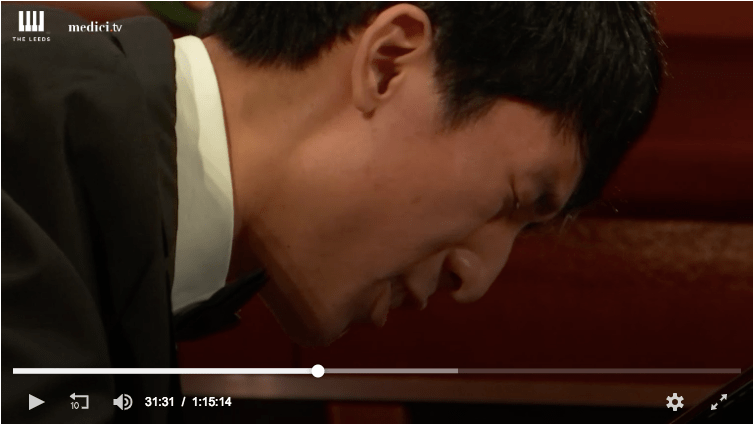
1. Eric Lu playing Chopin’s Piano Sonata No. 2 in B-flat Minor, op. 35
Never again did he reach such heights in the Leeds. Nor did anyone.
Undoubtedly, the most magical moment in the Leeds for me–and probably for a lot of people–was Eric’s performance of Chopin’s Second Sonata in his semifinal performance. It was during the third movement that he delivered his magical sermon in the form of the Funeral March, and everyone listening to it held their breaths. It was Eric’s defining moment in the competition; it was when he told us what he was capable of being. It is such moments where you think the Muses have descended upon us, and we have witnessed artistic enlightenment come from another realm, a realm unknown. In my opinion, this was the peak of Eric’s playing in the competition. Never again did he reach such heights in the Leeds. Nor did anyone.
https://leedspiano2018.medici.tv/replay/semi-final-with-eric-lu/
And there you go: my top ten moments of the Leeds! What a wonderful experience as an audience! I hope one day that I can be one of the candidates on stage.
And here I will conclude my little summer project of following the Leeds in my blog. It has been a great experience for me as well. I’ve learnt to listen to music more critically, reflected on what makes a good performance, and taken a lot of inspiration from these amazing musicians.
People who believe that classical music is dying is wrong. Never has classical music gained such a wide audience. With the internet, recording technology and live broadcast platforms such as medici.tv, you can literally watch a performance anywhere. We can listen to Bach when we feel meditative, or Wagner when we feel passionate or want some epicness in our lives, simply by plugging in our headphones or putting on a CD. At what point in history was people able to do that?
It is indeed great that classical music can be enjoyed by so many people, but that also means being a musician becomes a very competitive industry. But is that always a good thing? When so many people want to be pianists, all they care about is winning competitions, or playing the hardest pieces there can be found, because these are standards that can be measured. But then we might lose sight of what we really enjoy in music. The reason art, or music, prevails is because it means something different to each and every person. To allow the pursuit of making a career in music to take that from you would be a very sad and ironic thing.
People always say in their instagram bio: The creative adult is the child who never grew up or something along those lines, and I think there is some truth to it in music as well. Those who really flourish as the greatest of pianists never did it because they wanted a career out of playing piano. They did it because they retained that genuine love for music they probably had as a child. That doesn’t mean they never changed in the way they viewed music. I think that to sustain that genuine love for music requires constant redefinition of what music means. Only through constantly contemplating and keeping an open mind about music are we able to sustain our love for music, and trust me, you will never exhaust its resources. As Rachmaninoff famously said: “Music is enough for a lifetime, but a lifetime is not enough for music.”
I am constantly discovering new interesting things about music that I’ve heard a thousand times, or falling in love with music that I hated a year ago, or discovering new music I never expected to like (many times in the Leeds competition, in fact!) and I think that’s what’s so great about music.
The best musicians are all-round artists. They are not people who are confined by music, but are people who, through music, discovered similarities in other art forms, and try to bring them together. This endless creative process opens endless paths for classical music to resurface in and enrich the modern world, and I am so excited about this.
I guess what I really want to say in conclusion to my series of blogposts following the Leeds Piano Competition, is that never let other people define what music is to you.
See for yourself.
Thank you for following my blog. More posts and projects to come soon! Please keep supporting!
Jeremy
 Literally Left-handed
Leave a comment