On the rare occasion of having nothing to do on a Friday afternoon post-lectures, and an even rare occasion where none of my housemates were present in the kitchen, I decided to put on Netflix’s “The Ted Bundy Tapes”, a documentary still relatively hot off the press. Being the model uni student that I am, I finished the series of four episodes in a day. It’s not the most amazing feat, but considering the heaviness of the content, you have to give me credit on that.
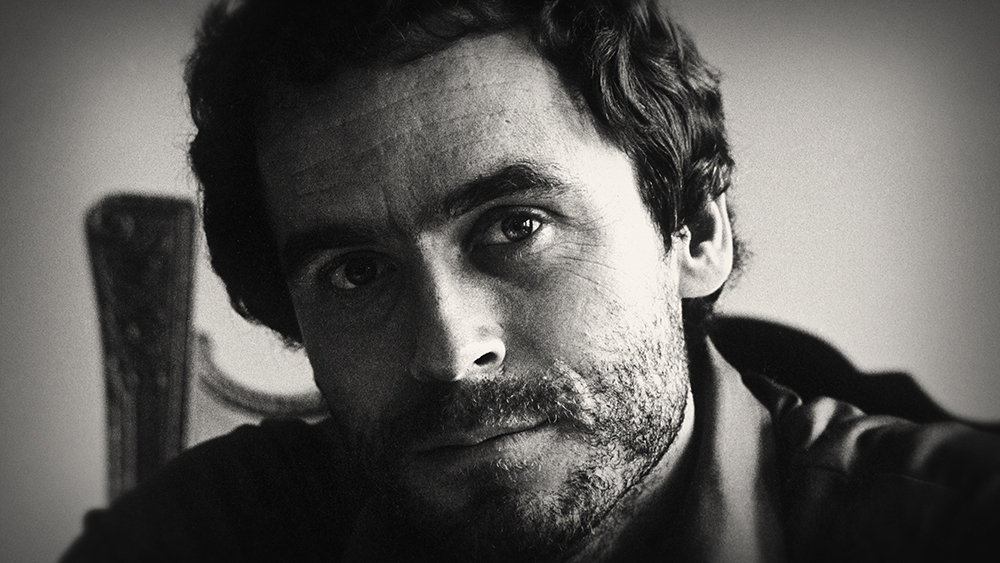
The documentary, spanning four episodes of about an hour each, gives a chronological account Theodore Robert Bundy’s murderous deeds, his miraculous escapes and his numerous trials. A collage of original footage, interviews and a taped recording of Bundy, it contains no central narrator. What does come through, though, as the documentary progresses, is a constant sense of all the voices from victims, prosecutors and lawyers trying to stifle Bundy’s own.
The documentary wasn’t what I expected it to be. I guess I sort of hoped it would be some sort of crime drama made to show the horrors of Bundy’s slaughters and expose the messed-up psychology of the subject. I know it’s quite cheesy, but I was only really looking for entertainment on an empty Friday afternoon.
Instead, the documentary remains fairly realistic and neutral in its reconstruction of Bundy’s cases. As the documentary gradually shows, Bundy was portrayed neither as the ultimate villain, nor a hero of his own story who struggles against a complex psychology or childhood. What really affected me was the way society dealt with him, and the law acted as an oppressive force against his existence.
There’s no doubt that what Bundy did was wrong. What he did was evil. Killing around 30 young women all around America, you can’t get much worse than that. And the fact that he still puts on a smiling face as he walks into court, being charming as usual, must piss people off. That’s understandable. But still, although much effort is put into charging him guilty, not much is done about trying to understand the person. At one point, those in charge of counselling and defending Bundy even tells him that they do not believe he will win the case, and would rather he bargain for a guilty plea. Even when Bundy was already charged with two cases of murder and put on death row, another court still decides to pursue charges further and charge him guilty of another murder. Of course such actions are justifiable; justice must be served to the innocents who suffered.
Nevertheless, no matter how sophisticated our society becomes, no matter how much we try to say violence is wrong, the penal system and the death penalty reflects our fundamental sense of retribution. It is society’s revenge on those who deviate. Bundy killed innocent young women without reason and without remorse. It is clearly irrational behaviour which the norm cannot relate to, and because it cannot relate with it, it must get rid of such a person. Bundy is branded as a ‘criminal’ who will never be able to fit into society, and can only be further and further stigmatized and isolated until he becomes a name associated with terror and nothing else. As Bundy time and again reiterates in the documentary, ‘they don’t understand. I’m a normal person.’ Instead, as the documentary progresses, I hear more regularly phrases such as ‘I hate him’, ‘I would pull the switch on him if I could’, and ‘I wish he would burn in hell’ from prosecutors and people who don’t even know him personally. It is scary to see how people there can be so much potential violence in ‘normal’ people, and that is seen as an acceptable thing against a criminal.
Is there really such a huge difference, then, between Bundy and the rest of the world? After all, it comes down to whether we carry out the action or not, because violence is right there in our discourse. Maybe what comes down to the difference between civilians and murderers is that we are able to repress our violent urges, whereas murderers sometimes let slip; in the case of serial killers, there may even be some neurological defect that does not give them the power to control themselves. Society gives them a label and expels them because they remind us of the inherent violence within us, a violence that if unleashed can be seriously disruptive to society. Yet, in the end, the difference between us and serial killers could be one small neurological blockage in the brain.
The scene near the end of the fourth episode, the one showing people celebrating after Bundy is electrocuted, is particularly moving to me. Here is an individual, kept in prison for over ten years, has almost no friends or family, whose death is celebrated and seen as an excuse to drink by people who barely knew him. After spending so much money trying to prevent his violent acts, society delivers the final act of violence and tries to put an end to it all.
In the documentary, it wasn’t the prosecutors who produced the most affecting speeches; it was the ones who actually got to know him in person, like the journalist who taped his interviews. It was through them that Ted’s humanity is fragmentally conveyed. Not much explanation was given about why he did what he did, nor were the prosecutors too fussed about it. I think that sometimes all society wants is a straightforward answer to something, and so they never bothered too much with Ted’s story. People don’t want to accept reality, which is almost always complicated and ambiguous; the less they know the better they can pass judgment on others. It is a torturous thing to acknowledge that such a murderous man is very similar to us.
From a distant onlooker (it’s now almost 30 years after his death), however, what I perceive is that there is a very fine line between right and wrong. As much as we hate to admit it, as much as we try to reverse it, society has always been the oppressor.
I highly recommend watching this documentary. I know my ideas aren’t very well developed, so do tell me what you think!


Leave a Reply